

 +400-8110278

 International Headquarters:
No. 801 Huagang Road, Wujiang Economic and Technological Development Zone, Suzhou City, Jiangsu Province, China
Global Customer Service Center:
Room 1101, Building 7, Phase 2, Nan'an Xindi, Suzhou Industrial Park, Jiangsu Province, China
No.20306 & 20307, 1st Street, 2nd Floor, East No.3 Gate, Zone 2, Yiwu International Trade City, Zhejiang Province, China
3rd Floor, Plaza No. 157, Main Boulevard, Sector C, DHA Phase 6, Lahore, Pakistan
No. 65A Rustaveli Street, Yakasaray District, Tashkent, Uzbekistan
JUNCESS Solar Battery Storage High-Voltage Energy Solutions
For industrial and commercial property owners and residential users who have installed energy storage systems, apart from taking heatstroke prevention measures for themselves, there is another hidden concern: under intense direct sunlight, will high temperatures affect the charge-discharge efficiency? Even worse, will it trigger potential safety hazards?
Traditional energy storage solutions often face severe tests in this season
Poor heat dissipation: In enclosed spaces or under direct sunlight, the cell temperature surges sharply, triggering overheat protection and forcing the system to operate at limited power.
Fast capacity degradation: High temperatures accelerate cell aging, drastically reducing the cycle life. A system originally designed for a 10-year service life may be "decommissioned" in only 5 years.
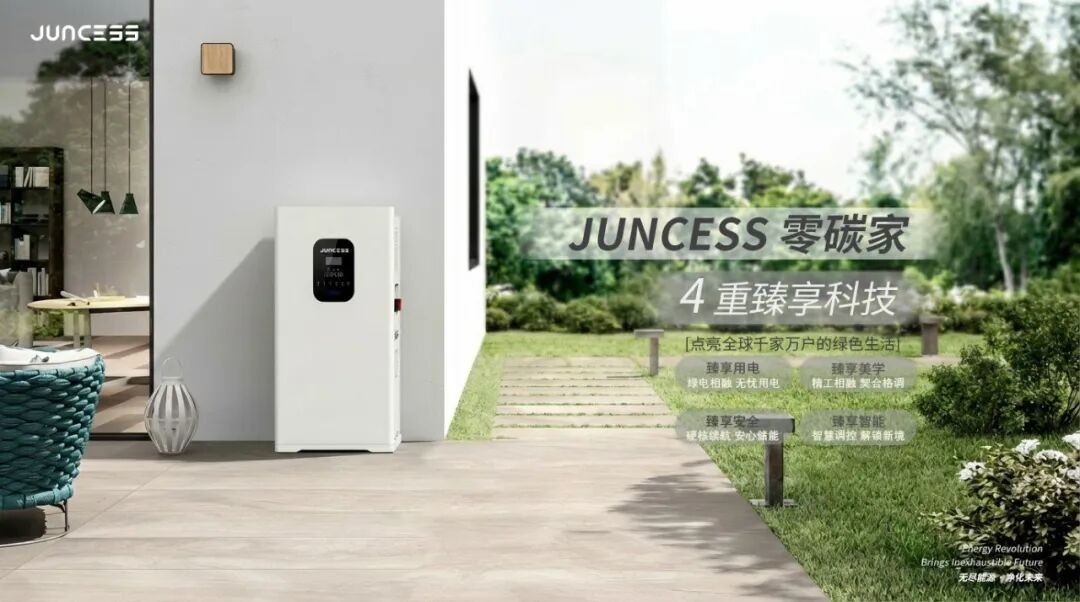
High safety risks: For some low-quality cells or products with defective heat dissipation design, the risk of thermal runaway rises sharply under high temperatures, making the safety defense line extremely fragile.
Extreme weather is the ultimate touchstone for testing the quality of energy storage products. As an innovative enterprise deeply rooted in the energy storage sector, JUNCESS New Energy has independently developed the JUNCESS high-voltage string-type stacked energy storage system, which is purpose-built to cope with such harsh operating environments.
From the cell level to the overall system design, JUNCESS has embedded "high temperature resistance" into its core DNA. Its operating temperature range covers -20℃ to 55℃, easily coping with extreme summer high temperatures. The system can still run at full power under intense sunlight without derating or current limiting. It is exclusively equipped with the claw-type universal ventilation lithium battery heat dissipation insulation plate! The lateral ventilation and hollow-out design forms a natural heat dissipation channel, requiring no extra energy consumption, which is both silent and highly reliable. The modular design combined with a scientific air duct ensures an extremely small temperature difference between modules, avoiding local overheating and making the system operation more stable. Even at an ambient temperature of 55℃, the internal cell temperature difference of JUNCESS can still be controlled within a very narrow range, and the charge-discharge efficiency is almost identical to that at normal temperature!
Safety is the lifeline of energy storage. JUNCESS has pushed safety protection to the extreme. It adopts highly stable LFP cells with a high thermal runaway temperature, eliminating risks from the source. The built-in aerosol fire protection system responds to fire hazards at the millisecond level for rapid suppression. The SPCC-made enclosure with IP54 protection rating is dustproof and waterproof. The cells support over 6000 cycles and a 10-year design life, with extremely low degradation under high temperatures.
Compared with the bulky traditional energy storage products, JUNCESS redefines convenience
Plug-and-play stacking: 2 to 20 modules can be freely combined, with a starting capacity of 16kWh and a maximum expandable capacity of 321.4kWh. No crane is required, and the stacking installation can be completed manually.
Zero floor space wall-mounted installation: The modular design with base support allows direct wall-mounted installation. It can be deployed in warehouse corners, narrow equipment rooms, outdoor walls and other scenarios, with no need for pouring a cement foundation.
Full-scenario adaptation: Indoor/outdoor, industrial & commercial/residential, PV power station/microgrid... JUNCESS can perfectly fit in all kinds of scenarios under high-temperature environments.




International Headquarters :
No. 801 Huagang Road, Wujiang Economic and Technological Development Zone, Suzhou City, Jiangsu Province, China
Global Customer Service Center:
Room 1101, Building 7, Phase 2, Nan'an Xindi, Suzhou Industrial Park, Jiangsu Province, China
No.20306 & 20307, 1st Street, 2nd Floor, East No.3 Gate, Zone 2, Yiwu International Trade City, Zhejiang Province, China
3rd Floor, Plaza No. 157, Main Boulevard, Sector C, DHA Phase 6, Lahore, Pakistan
No. 65A Rustaveli Street, Yakasaray District, Tashkent, Uzbekistan
