

 +400-8110278

 International Headquarters:
No. 801 Huagang Road, Wujiang Economic and Technological Development Zone, Suzhou City, Jiangsu Province, China
Global Customer Service Center:
Room 1101, Building 7, Phase 2, Nan'an Xindi, Suzhou Industrial Park, Jiangsu Province, China
No.20306 & 20307, 1st Street, 2nd Floor, East No.3 Gate, Zone 2, Yiwu International Trade City, Zhejiang Province, China
3rd Floor, Plaza No. 157, Main Boulevard, Sector C, DHA Phase 6, Lahore, Pakistan
No. 65A Rustaveli Street, Yakasaray District, Tashkent, Uzbekistan
Why 10ms Switching Matters in an All-in-One Energy Storage System
When the grid supply becomes unstable or fails completely, the time required to transfer a load to backup power can determine whether sensitive equipment continues operating normally. This is where switching time becomes an important specification in an energy storage system. A system rated for a maximum switching time of 10 milliseconds can respond quickly enough to make the transition less noticeable for many connected loads.
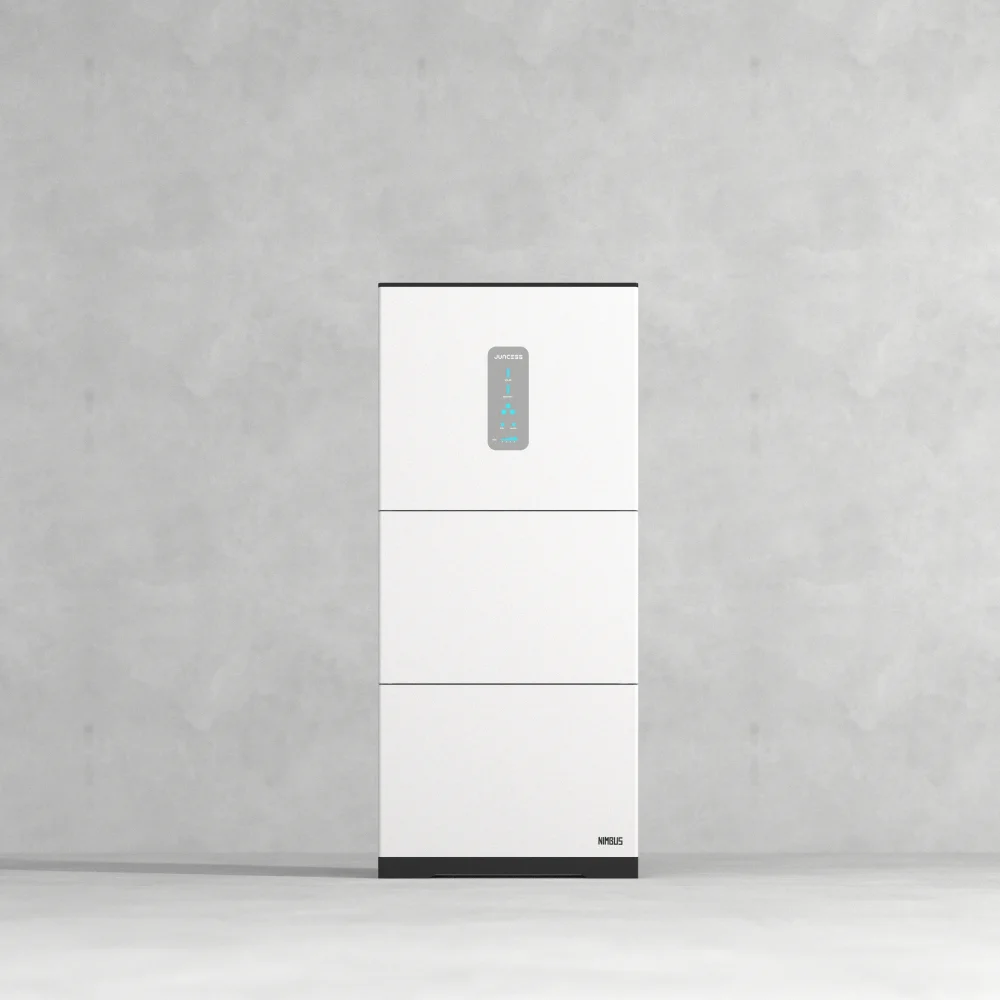
The All-in-One Energy Storage System from JUNCESS combines a hybrid grid inverter, low-voltage LFP battery system, backup output and intelligent control functions in one integrated package. Its specified maximum switching time is ≤10 ms, while the backup output is rated at 230V with a voltage THD of less than 3% under linear load conditions. These specifications are useful when evaluating how the system handles a change from grid power to backup operation.
What Does 10ms Switching Actually Mean?
A switching time describes the interval required for the energy storage system to transfer the relevant output from one power source to another after a grid interruption or defined abnormal condition.
Ten milliseconds is 0.01 seconds. In practical terms, this is a very short transition period, but it does not mean that every connected device will behave exactly the same way during a grid event.
Different electrical loads have different tolerance levels for power interruptions. A simple lighting circuit may respond differently from a computer, networking device, control system or motor-driven load. The switching specification should therefore be considered together with the characteristics of the equipment being powered.
For backup applications, the objective is not simply to have a battery available. The inverter, battery, control logic and output circuit must work together quickly enough to provide a usable backup supply.
Why Fast Switching Is Important for Backup Loads
A conventional backup arrangement may require several stages to detect a power problem, disconnect the grid supply and establish the backup output. The longer this process takes, the greater the possibility that connected equipment will experience a noticeable interruption.
With a maximum switching time of ≤10 ms, the All-in-One(Hybrid Grid)-Low Voltage system is designed around a fast transition between grid and backup operation.
This can be useful for loads where even a short interruption can cause equipment to restart, trigger an alarm or interrupt an ongoing process. The actual response of a specific device still depends on its own power-supply design and tolerance, so users should verify compatibility when supplying sensitive equipment.
The important point is that switching time should be evaluated as part of the complete backup system rather than as an isolated battery specification.
230V Backup Output Gives the Switching Function a Practical Role
The system provides a 230V backup output with a rated apparent power of 5000VA and a rated current of 21.7A at 230V. This gives the switching function a direct connection to real-world load requirements.
For example, a user may need to maintain selected circuits during a grid interruption instead of attempting to power every load in a facility. Critical lighting, communications equipment, monitoring devices, control equipment and selected household or commercial loads can be assessed according to their power requirements.
The backup output also specifies a voltage THD of less than 3% at linear load conditions. This is relevant because backup performance is not only about how quickly power becomes available. The quality of the supplied AC output also matters to connected electrical equipment.
When planning a backup circuit, users should therefore consider three factors together: the power required by the loads, the available backup output and the electrical characteristics of the equipment.
The Inverter Has to React Quickly
Fast switching depends on more than battery capacity. The inverter is responsible for managing the conversion between DC energy stored in the battery and AC power supplied to the load.
The JNL series provides several output power configurations. The listed rated active power ranges from 3000W for the JNL3KH to 6000W for the JNL6KH. Rated output current at 230V ranges from 13A to 26.1A across these configurations.
This gives buyers several power levels to consider when planning an installation. A system with a larger inverter does not automatically mean every load can be connected to the backup output. The actual load profile, starting current and continuous consumption still need to be evaluated.
For this reason, switching time and inverter capacity should be treated as two separate selection criteria. A fast transfer cannot compensate for an undersized backup output.
Battery Response and Low-Voltage Architecture
The battery side of the system uses lithium iron phosphate, or LFP, technology. The available total battery capacity is 5.22kWh or 10.44kWh, with one or two battery packs supported.
The battery has a nominal voltage of 51.2V and a maximum charging/discharging current of 50A/50A.
Battery capacity determines how long the system can support a load, while switching performance determines how quickly backup power can become available after a grid event. These are different functions.
For example, a larger battery does not necessarily mean faster switching. Conversely, a system with fast switching still needs sufficient stored energy if the backup load must operate for an extended period.
This distinction is important when designing an energy storage system. Users should first identify which loads need backup, how much power those loads consume and how long backup operation is required.
Power Quality Matters After the Transfer
A fast transfer is only useful if the backup supply is suitable for the connected load.
The system specifies less than 3% output voltage THD at rated power and less than 3% THD for the backup output under linear load conditions. The power factor is specified at ≥0.99, with an adjustable range from 0.8 leading to 0.8 lagging.
These figures provide a broader picture of the inverter's output characteristics.
For businesses operating electronic equipment, control systems or other electrically sensitive loads, power quality should be reviewed alongside switching time. A backup system needs to provide not only rapid transfer but also an appropriate AC supply once the transfer has taken place.
Protection Functions Support Reliable Operation
A backup system also needs to handle abnormal electrical conditions safely. The JUNCESS system includes a range of protection functions, including input reverse polarity protection, residual current detection, anti-islanding protection, ground fault detection, AC short-circuit protection and AC overvoltage protection.
It also incorporates a DC switch and a fire protection system using perfluoro-2-methyl-3-pentanone.
These features are relevant because a battery energy storage system operates with stored electrical energy even when the utility grid is unavailable. Protection functions help address different electrical fault conditions, while the fire suppression system adds another layer of safety within the equipment.
The IP65 protection rating is also worth considering for installation planning. Combined with a stated operating temperature range of -25°C to +60°C and natural convection cooling, the enclosure is designed for a range of operating environments. Actual installation conditions should still follow the manufacturer's requirements.
Fast Switching Is Only One Part of System Reliability
It is easy to focus on the 10 ms figure when comparing backup systems, but switching performance should not be evaluated alone.
The All-in-One Energy Storage System also integrates battery storage, PV input, grid input, backup output and system controls into one equipment platform. This reduces the need to treat each component as a completely separate installation.
On the solar side, the system supports maximum PV input power ranging from 5500Wp to 9000Wp across the listed JNL3KH to JNL6KH models. The stated MPPT efficiency is 99.9%, while maximum efficiency is listed at 97.6%.
This means the system can serve a broader role than simply acting as an emergency battery. It can coordinate solar generation, battery charging, grid power and backup loads within one energy management architecture.
Monitoring Makes Backup Management More Practical
Another useful part of the system is the JUNCESS App and intelligent energy management system.
For users managing an energy storage installation, online monitoring can provide visibility into operating status and energy flows without requiring every check to be performed directly at the equipment.
Communication options include RS485, CAN and Wi-Fi, while the user interface combines LED indicators with App-based monitoring.
This becomes particularly useful when the system is installed in a location that is not continuously supervised. Instead of only discovering a problem after a backup event, operators can use monitoring information as part of routine system management.
Choosing the Right Model Around the 10ms Specification
The JNL3KH, JNL3.6KH, JNL4KH, JNL5KH and JNL6KH models provide different inverter power levels, but the maximum switching time is specified at ≤10 ms for the backup output.
The model selection should therefore be based primarily on the expected load rather than assuming that a higher-capacity model is required simply because it offers a larger battery or inverter.
A practical assessment should include normal operating load, critical backup load, peak demand, motor starting requirements, PV generation and the desired backup duration.
For installations with one battery pack, the listed dimensions are approximately 598 × 200.5 × 1006 mm and the weight is about 89.9 kg. With two battery packs, the listed dimensions increase to approximately 598 × 200.5 × 1409 mm, with a weight of about 137.8 kg. These figures should also be considered when planning the installation area.
Where Fast Switching Makes the Most Difference
The value of a ≤10 ms switching specification depends heavily on the application.
In a home, it can be relevant to selected circuits supporting communications, lighting, refrigeration or other equipment where an unexpected interruption is inconvenient. In a small commercial installation, it may be useful for networking equipment, security systems, monitoring equipment and selected operational loads.
For solar-storage installations, fast switching can also provide a smoother transition when the grid becomes unavailable while stored battery energy takes over the backup supply.
However, no single switching specification guarantees uninterrupted operation for every electrical device. Critical equipment may require additional UPS functionality or manufacturer-approved backup arrangements.
A More Complete Way to Evaluate Backup Performance
A good energy storage evaluation should therefore look beyond the headline switching figure.
Start with the loads that genuinely need backup. Determine their continuous and peak power requirements, then check the inverter's rated output and backup capacity. Next, consider battery capacity and the expected backup duration.
After that, review electrical performance, protection functions, environmental ratings and monitoring capabilities.
In the case of the JUNCESS system, the combination of ≤10 ms switching, 230V backup output, less than 3% THD, LFP battery technology, IP65 protection and integrated monitoring creates a more complete picture of its backup capability.
JUNCESS Approach to Integrated Energy Storage
Jiangsu Juncess Energy Co., Ltd. has more than 11 years of experience in the new energy sector and has developed capabilities covering R&D, manufacturing, channels and integrated energy solutions.
The company has expanded from photovoltaic module trading into energy storage, with a current energy storage production capacity of 1.5 GWh. Its products have obtained multiple international certifications and industry recognition, while its overseas business network covers Asia, Europe, Africa, the Middle East and Australia.
With more than 400 long-term strategic partners, the company is also developing localized operations in markets including Central Asia, Pakistan, Australia and emerging African markets.
This broader experience is relevant when an energy storage product needs to be considered as part of an actual solar-storage project rather than purchased as an isolated battery unit.
Final Thoughts
A 10 ms switching specification may look like just another number on an energy storage datasheet, but it has a direct connection to how a backup system responds when grid power becomes unavailable.
The All-in-One Energy Storage System combines a maximum switching time of ≤10 ms with 230V backup output, less than 3% backup-output THD, LFP batteries, multiple electrical protection functions and intelligent monitoring. Its 1–2 battery-pack configuration also provides a practical way to match stored capacity with different energy requirements.
For buyers, the key is to evaluate switching time together with inverter capacity, load characteristics, battery capacity, power quality and installation conditions. A fast transition is valuable, but reliable backup depends on the complete system working together.
When these factors are considered as a whole, All-in-One Energy Storage System technology can provide a practical foundation for solar-storage installations that need both energy management and responsive backup power.




International Headquarters :
No. 801 Huagang Road, Wujiang Economic and Technological Development Zone, Suzhou City, Jiangsu Province, China
Global Customer Service Center:
Room 1101, Building 7, Phase 2, Nan'an Xindi, Suzhou Industrial Park, Jiangsu Province, China
No.20306 & 20307, 1st Street, 2nd Floor, East No.3 Gate, Zone 2, Yiwu International Trade City, Zhejiang Province, China
3rd Floor, Plaza No. 157, Main Boulevard, Sector C, DHA Phase 6, Lahore, Pakistan
No. 65A Rustaveli Street, Yakasaray District, Tashkent, Uzbekistan
