

 +400-8110278

 International Headquarters:
No. 801 Huagang Road, Wujiang Economic and Technological Development Zone, Suzhou City, Jiangsu Province, China
Global Customer Service Center:
Room 1101, Building 7, Phase 2, Nan'an Xindi, Suzhou Industrial Park, Jiangsu Province, China
No.20306 & 20307, 1st Street, 2nd Floor, East No.3 Gate, Zone 2, Yiwu International Trade City, Zhejiang Province, China
3rd Floor, Plaza No. 157, Main Boulevard, Sector C, DHA Phase 6, Lahore, Pakistan
No. 65A Rustaveli Street, Yakasaray District, Tashkent, Uzbekistan
6.144kWh LFP Modules: Building a Scalable High-Voltage Battery System
As energy storage requirements vary from one project to another, a fixed-capacity battery is not always the most practical choice. Residential users may have different backup requirements from commercial sites, while solar-storage projects may also need additional capacity as electricity consumption changes.
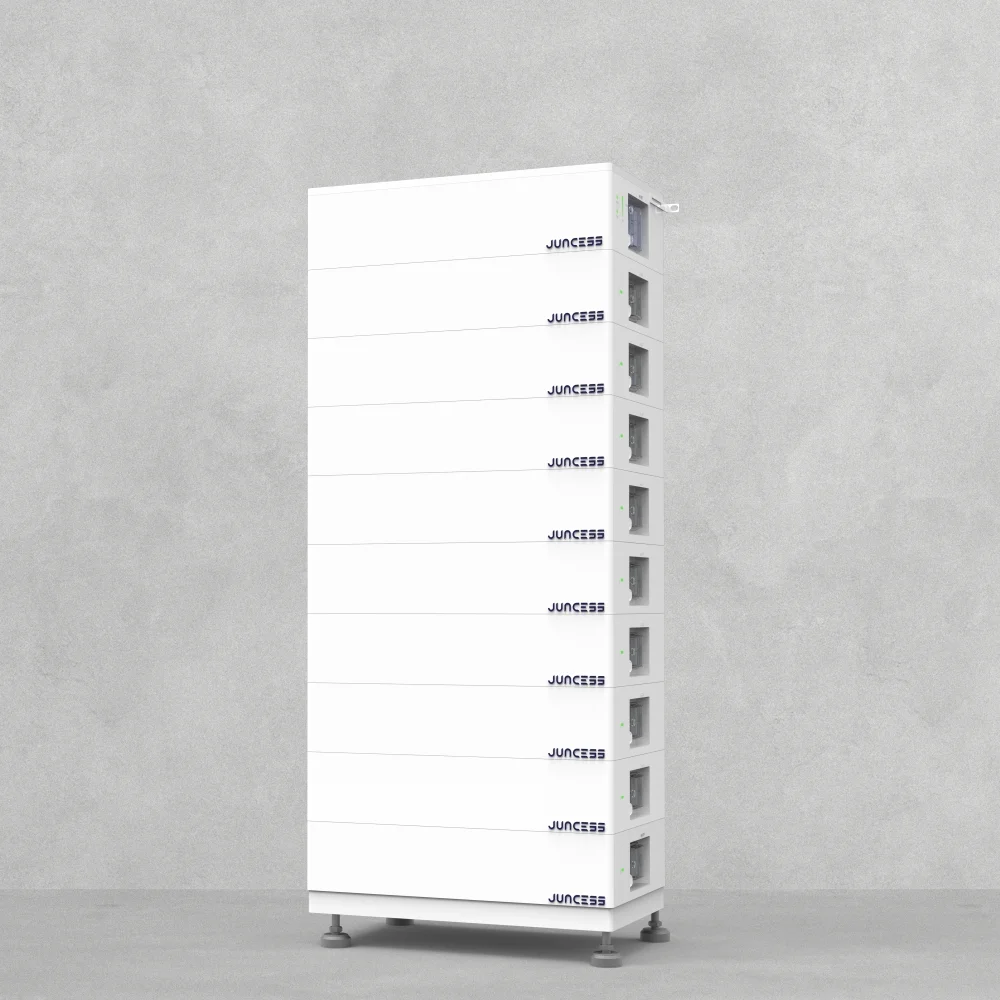
The Stacked- Australian Version(High Voltage)6.144kWh(Energy Storage Battery) takes a modular approach to this challenge. Based on lithium iron phosphate (LFP) technology, the system uses stackable 6.144kWh battery modules that can be configured from two to nine units. This provides a rated energy range from 12.29kWh to 55.30kWh while maintaining the same basic battery platform.
Flexible Capacity Through Modular Configuration
The JCH6.144 single battery module has a rated capacity of 120Ah, nominal voltage of 51.2V, and rated energy of 6.144kWh. Multiple modules can be combined to create different high-voltage system configurations.
The available configurations include JCH6.144-M2, M3, M4, M5, M6, M7, M8, and M9. The M2 configuration provides 12.29kWh of rated energy, while the M4 configuration reaches 24.58kWh. For applications requiring greater storage capacity, M6 provides 36.86kWh and M9 reaches 55.30kWh.
The usable energy also increases with the number of modules. The M2 system provides 11.06kWh of usable energy, while the M9 system provides 49.77kWh.
This configuration method gives installers more options when matching storage capacity with actual electricity demand. Instead of selecting a completely different battery model for each project size, the required capacity can be achieved by changing the number of modules within the supported range.
Building a Higher-Voltage Battery System
The module count affects system voltage as well as energy capacity.
The M2 configuration has a rated voltage of 102.4V, while M3 reaches 153.6V and M4 reaches 204.8V. At the other end of the range, the M9 configuration has a rated voltage of 460.8V and a maximum voltage of 525.6V.
This makes inverter compatibility an important part of system planning. Before installation, system designers need to confirm that the selected battery configuration matches the inverter's voltage range, communication requirements, charging parameters, and protection settings.
The high-voltage architecture can also be useful for applications where system designers want to increase stored energy without relying on a large number of low-voltage battery units operating independently.
LFP Battery Technology for Long-Term Cycling
The 6.144kWh LFP battery module uses lithium iron phosphate chemistry, a battery technology widely applied in stationary energy storage.
The specified design life is 10 years, while the cycle life is rated at up to 6,000 cycles. Grade A battery cells are used to support long-term operating consistency.
The module has a rated charge and discharge current of 50A and a maximum charge and discharge current of 100A. The recommended charge and discharge C-rate is 0.5C, with a specified depth of discharge of 100%.
For a real energy storage project, these parameters should be considered together rather than individually. The appropriate configuration depends on daily electricity consumption, charging sources, expected cycling frequency, inverter capacity, and backup requirements.
A Stackable Design for Easier System Planning
A major practical feature of this battery system is its stackable structure.
Each battery module measures 640 × 368 × 152mm and weighs approximately 50kg. The complete system includes the battery modules, high-voltage control box, and base support.
The overall dimensions change according to the number of modules installed. The M2 system measures 640 × 368 × 582mm, while the M5 system reaches 640 × 368 × 1038mm. The M9 configuration measures 640 × 368 × 1646mm.
This vertical arrangement can make efficient use of floor space, but installation conditions still need to be checked carefully. Installers should consider floor loading, ceiling clearance, maintenance access, cable routing, and the location of the inverter before determining the final configuration.
The modular structure also provides a more straightforward way to plan capacity for projects where energy requirements may change. A system can be configured according to current demand while leaving room for a larger configuration where the project design allows it.
Protection for Different Installation Conditions
Energy storage equipment may be exposed to changing temperatures and environmental conditions, particularly in distributed installations.
The system is specified for an operating temperature range of -20°C to 55°C and uses natural cooling. It also has an IP65 protection rating and an SPCC enclosure.
The system incorporates a fire protection system using Perfluoro-2-methyl-3-pentanone. These protection features are designed as part of the overall battery architecture rather than being treated as separate accessories.
For installers, however, the battery's protection rating does not replace proper site planning. Installation should still follow applicable electrical requirements and the manufacturer's instructions, with suitable clearance and environmental conditions maintained around the equipment.
Communication and Intelligent Energy Management
A battery system becomes more useful when its operating status can be monitored and coordinated with other energy equipment.
The JCH6.144 system supports RS485 and CAN communication protocols. These interfaces can be used with compatible energy management and control systems for monitoring and system coordination.
Remote monitoring and intelligent scheduling can help operators understand battery operating conditions and manage charging and discharging according to the overall energy strategy.
For solar-storage projects, this type of communication can also help coordinate battery operation with photovoltaic generation and electricity consumption. Instead of treating the battery as an isolated backup device, it can form part of a wider energy management system.
Suitable for Residential and Distributed Energy Storage
The Stacked- Australian Version(High Voltage)6.144kWh(Energy Storage Battery) is suitable for projects that require flexible energy capacity within a relatively standardized battery architecture.
For residential applications, smaller configurations can provide storage for solar energy and backup loads. Larger configurations can be considered when household electricity consumption or backup requirements are higher.
The system can also be evaluated for distributed commercial applications where modular capacity and high-voltage operation are important design considerations.
For projects in Australia, buyers should additionally confirm local installation requirements, electrical regulations, inverter compatibility, and certification requirements before deployment.
Why Battery Manufacturing Capability Matters
Selecting an energy storage battery involves more than checking nominal capacity and cycle life. Manufacturing consistency, technical support, customization capability, and supply experience can have a direct impact on project implementation.
Jiangsu Juncess Energy Co., Ltd. has more than 11 years of experience in the new energy sector and has developed capabilities covering R&D, manufacturing, channels, and energy storage solutions.
The company currently has an energy storage production capacity of 1.5GWh and works with more than 400 long-term strategic partners. Its business network covers Asia, Europe, Africa, the Middle East, and Australia.
Juncess has also developed experience in non-standard automated customization and integrated solar-storage solutions. Its product development approach combines photovoltaic and energy storage technologies with intelligent energy management, allowing the company to serve different application requirements.
For overseas buyers, this broader capability can be useful when a project requires more than a standard battery product, particularly where system configuration, customization, integration, and long-term technical support need to be considered together.
Making Modular Storage Work in Practice
A modular battery system is valuable when its flexibility solves an actual project requirement. The ability to select between two and nine modules allows system designers to adjust energy capacity without changing the fundamental battery platform.
The JCH6.144 system combines 6.144kWh LFP modules with high-voltage configurations, RS485/CAN communication, IP65 protection, natural cooling, and a stated cycle life of 6,000 cycles. These specifications provide a practical foundation for residential and distributed energy storage projects.
However, the correct system size should always be determined from the application's load profile and electrical requirements. Battery capacity, usable energy, inverter compatibility, installation environment, backup duration, and local regulations all need to be reviewed before the final configuration is selected.
With the ability to build systems from 12.29kWh up to 55.30kWh, the Stacked- Australian Version(High Voltage)6.144kWh(Energy Storage Battery) offers a scalable approach for projects that need flexible capacity without moving to an entirely different battery platform.




International Headquarters :
No. 801 Huagang Road, Wujiang Economic and Technological Development Zone, Suzhou City, Jiangsu Province, China
Global Customer Service Center:
Room 1101, Building 7, Phase 2, Nan'an Xindi, Suzhou Industrial Park, Jiangsu Province, China
No.20306 & 20307, 1st Street, 2nd Floor, East No.3 Gate, Zone 2, Yiwu International Trade City, Zhejiang Province, China
3rd Floor, Plaza No. 157, Main Boulevard, Sector C, DHA Phase 6, Lahore, Pakistan
No. 65A Rustaveli Street, Yakasaray District, Tashkent, Uzbekistan
