

 +400-8110278

 International Headquarters:
No. 801 Huagang Road, Wujiang Economic and Technological Development Zone, Suzhou City, Jiangsu Province, China
Global Customer Service Center:
Room 1101, Building 7, Phase 2, Nan'an Xindi, Suzhou Industrial Park, Jiangsu Province, China
No.20306 & 20307, 1st Street, 2nd Floor, East No.3 Gate, Zone 2, Yiwu International Trade City, Zhejiang Province, China
3rd Floor, Plaza No. 157, Main Boulevard, Sector C, DHA Phase 6, Lahore, Pakistan
No. 65A Rustaveli Street, Yakasaray District, Tashkent, Uzbekistan
How Stackable Low Voltage Batteries Simplify Home Energy Storage Expansion
Home energy storage requirements do not always remain the same. A household may begin with a moderate storage requirement and later add solar generation, an electric vehicle, additional appliances, or higher backup requirements. If the battery system cannot expand easily, increasing capacity may require replacing major components or redesigning the installation.
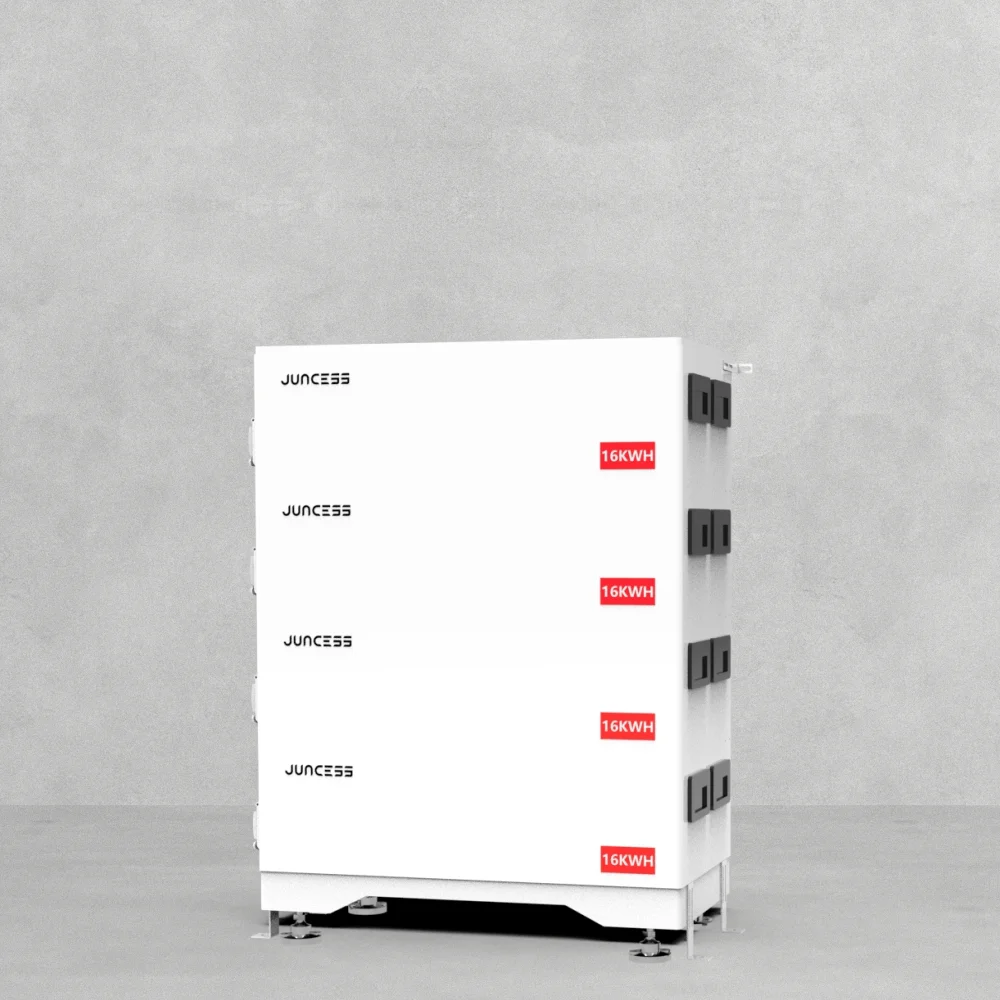
The Stacked- Australian Version(Low Voltage) 16kWh (Energy Storage Battery) takes a different approach. Its stackable structure and modular design allow the storage capacity to grow according to actual requirements. Starting with the JCL16 at 16.07 kWh, users can move to larger configurations of 32.15 kWh, 48.23 kWh, or 64.30 kWh within the same product family.
Why Modular Capacity Matters for Home Storage
A fixed-capacity battery can work well when the household's energy consumption is predictable. However, residential electricity demand can change over time. A family may install additional solar panels, add high-power appliances, or want more backup capacity for essential loads.
A modular battery system makes this change easier to manage. Instead of selecting the largest possible battery from the beginning, homeowners can choose a capacity closer to their current requirements and plan for future expansion.
The JCL series provides four defined capacity levels:
JCL16: 16.07 kWh
JCL32: 32.15 kWh
JCL48: 48.23 kWh
JCL64: 64.30 kWh
All four models use LFP lithium iron phosphate battery technology and have a nominal voltage of 51.2 V. This consistent electrical platform helps create a straightforward capacity progression within the series.
Stackable Structure for Practical Expansion
The main advantage of the 16kWh Energy Storage Battery is not simply its capacity. Its stackable structure is designed around modular expansion.
The physical configuration also changes progressively with capacity. The standard dimensions are approximately 890 mm wide and 430 mm deep, while the height increases from 265 mm for the JCL16 to 515 mm for the JCL32, 765 mm for the JCL48, and 1015 mm for the JCL64.
This vertical approach can help make better use of available floor space. Instead of spreading multiple battery units across a larger installation area, the stackable architecture builds capacity upward within a defined footprint.
A base tray is also available for the configurations, with corresponding overall dimensions of 890 × 340 × 430 mm for JCL16 and progressively greater heights for larger configurations.
For residential installations, this type of layout can be useful where floor area is limited but additional storage capacity may be required later.
Plug-and-Play Expansion Reduces Installation Complexity
A modular battery is most useful when expansion does not become a complicated engineering project. The product therefore incorporates a "plug and play" expansion concept.
For homeowners and installers, this means the expansion process can be planned around modular battery units rather than treating every capacity increase as a completely new battery system.
This approach can simplify capacity planning. An installer can evaluate current energy requirements, select an appropriate configuration, and consider future expansion during the initial system design.
It is particularly useful for residential energy storage because household requirements are often different from one property to another. A home with moderate daily consumption may not require the same storage capacity as a larger property with greater backup requirements.
LFP Battery Technology for Long-Term Operation
The battery system uses lithium iron phosphate, or LFP, cells. The product specification lists Grade A battery cells, a design life of 10 years, and a cycle life of 6000 cycles.
The system also specifies a 100% depth of discharge. This parameter is important when evaluating how much of the rated energy can be used during a charge and discharge cycle.
The JCL16 provides 16.07 kWh of rated energy with a 314 Ah rated capacity. The larger configurations increase capacity while retaining the same 51.2 V nominal voltage:
JCL32 provides 32.15 kWh and 628 Ah, JCL48 provides 48.23 kWh and 942 Ah, while JCL64 provides 64.30 kWh and 1256 Ah.
The rated charge and discharge current is 150 A across the series, with a maximum charge and discharge current of 200 A. The recommended charge/discharge C rate is 0.5C.
These specifications provide installers with a consistent reference when matching the battery configuration to the rest of a residential energy storage system.
Intelligent Energy Management Goes Beyond Battery Capacity
Capacity expansion is only one part of a modern energy storage system. Once more battery capacity is installed, users also need practical ways to monitor and manage the system.
The Stacked Low Voltage Battery supports intelligent energy management with remote monitoring and intelligent scheduling functions. Its communication protocols include CAN and RS485.
These functions can help connect the battery to compatible energy management and control equipment, allowing operating information to be monitored and system operation to be managed more efficiently.
For homeowners, remote monitoring can reduce the need for frequent on-site checks. For installers and service teams, communication interfaces can provide useful information when evaluating operating status or troubleshooting system issues.
The combination of modular capacity and intelligent management therefore addresses two different requirements: how much energy can be stored and how the stored energy can be monitored and managed.
Protection Designed for Residential Installation
Safety and environmental protection are important considerations when installing battery systems inside or around a home. The JCL series has an IP65 protection rating and an operating temperature range of -20°C to 55°C.
The system uses natural cooling rather than a more complex active cooling arrangement. This contributes to a relatively straightforward thermal management structure.
Another important feature is the integrated fire protection system based on perfluoro-2-methyl-3-pentanone. Combined with industrial-grade intelligent safety features and multiple reliability certifications, this provides an additional layer of protection within the battery system.
These features should still be considered together with local installation requirements, ventilation conditions, electrical protection, and applicable regulations. Proper installation remains essential regardless of the battery's built-in protection functions.
A More Practical Approach to Future Capacity Requirements
The biggest benefit of modular storage is the ability to plan for changing requirements instead of trying to predict the entire future energy demand at the beginning.
For example, a household may start with the JCL16 configuration when its existing solar generation and backup requirements are moderate. If electricity consumption increases later, the product family offers 32.15 kWh, 48.23 kWh, and 64.30 kWh configurations.
This makes capacity planning more straightforward for installers. The selection can be based on actual load requirements, available installation space, expected energy consumption, and the desired backup duration.
The lightweight design is also intended to make home installation more convenient. Although the JCL16 itself has a listed product weight of 128 kg, the modular structure allows larger systems to be configured as a series of standardized battery modules rather than requiring one extremely large battery enclosure.
Why the Australian Version Is Relevant to Local Projects
The Australian version is designed for the requirements of the Australian energy storage market, where residential solar and battery systems are increasingly integrated into household energy management.
For an Australian installation, battery selection should consider more than nominal capacity. Operating temperature, protection rating, communication compatibility, installation space, battery chemistry, expansion requirements, and local electrical standards all need to be evaluated as part of the complete system.
The 51.2 V low-voltage architecture, IP65 rating, -20°C to 55°C operating temperature range, natural cooling, CAN and RS485 communication, and stackable structure provide several practical parameters for system designers to assess.
The Stacked- Australian Version 16kWh Battery therefore fits into a broader system design rather than functioning simply as a standalone storage product.
Manufacturing and Energy Storage Expertise from Jiangsu Juncess Energy
Behind the product is Jiangsu Juncess Energy Co., Ltd., which has 11 years of experience in the new energy sector and has developed capabilities spanning R&D, manufacturing, channels, and energy storage solutions.
The company has established overseas market experience across Asia, Europe, Africa, the Middle East, and Australia, with more than 400 long-term strategic partners. It has also developed localized market operations in Pakistan and Central Asia, while expanding its presence in emerging markets.
Its energy storage business currently has a production capacity of 1.5 GWh. The company states that its energy storage products have obtained multiple international certifications and industry awards.
With experience in non-standard automated customization and new energy manufacturing, Juncess has expanded from its earlier photovoltaic business into integrated solar-storage solutions. The company's development also focuses on combining photovoltaic, energy storage, AI technology, and digital energy management.
For international buyers, this manufacturing and solution capability is relevant when evaluating not only individual battery specifications but also the supplier's ability to support larger energy storage projects.
A Scalable Battery Architecture for Changing Home Energy Needs
The Stacked- Australian Version(Low Voltage) 16kWh (Energy Storage Battery) is designed around a simple principle: residential energy storage should be able to adapt as household requirements change.
Its modular stackable structure provides a defined path from 16.07 kWh to 64.30 kWh, while plug-and-play expansion, LFP battery technology, 6000-cycle life, 100% DOD, IP65 protection, intelligent energy management, and integrated fire protection address practical requirements beyond capacity alone.
For homeowners and installers planning a system that may need more storage in the future, the Stacked Low Voltage Energy Storage Battery offers a more flexible starting point than a fixed-capacity architecture. Supported by the manufacturing and new energy experience of Jiangsu Juncess Energy Co., Ltd., the solution provides a practical foundation for scalable residential energy storage in Australia and other markets.




International Headquarters :
No. 801 Huagang Road, Wujiang Economic and Technological Development Zone, Suzhou City, Jiangsu Province, China
Global Customer Service Center:
Room 1101, Building 7, Phase 2, Nan'an Xindi, Suzhou Industrial Park, Jiangsu Province, China
No.20306 & 20307, 1st Street, 2nd Floor, East No.3 Gate, Zone 2, Yiwu International Trade City, Zhejiang Province, China
3rd Floor, Plaza No. 157, Main Boulevard, Sector C, DHA Phase 6, Lahore, Pakistan
No. 65A Rustaveli Street, Yakasaray District, Tashkent, Uzbekistan
