

 +400-8110278

 International Headquarters:
No. 801 Huagang Road, Wujiang Economic and Technological Development Zone, Suzhou City, Jiangsu Province, China
Global Customer Service Center:
Room 1101, Building 7, Phase 2, Nan'an Xindi, Suzhou Industrial Park, Jiangsu Province, China
No.20306 & 20307, 1st Street, 2nd Floor, East No.3 Gate, Zone 2, Yiwu International Trade City, Zhejiang Province, China
3rd Floor, Plaza No. 157, Main Boulevard, Sector C, DHA Phase 6, Lahore, Pakistan
No. 65A Rustaveli Street, Yakasaray District, Tashkent, Uzbekistan
How Six Battery Time Periods Improve Hybrid Inverter Scheduling
A battery energy storage system does not operate under the same conditions throughout the day. Solar generation changes with sunlight, electrical loads rise and fall with production or household activity, and the battery may need to charge during one period and discharge during another. Without a clear operating schedule, available battery capacity may not be used in the way the system designer intended.
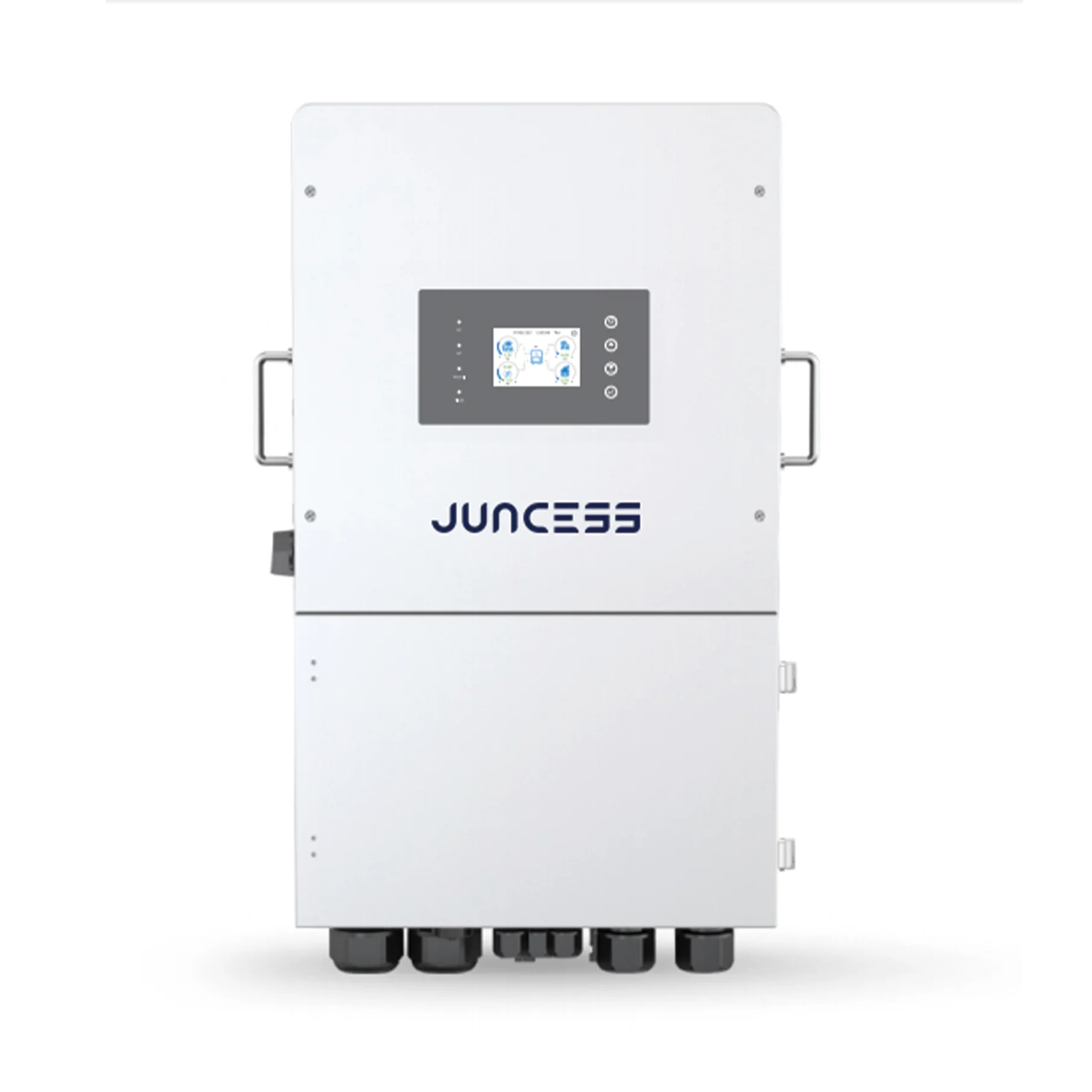
This is where time-based battery control becomes useful. The Three Phase Hybrid Inverter from JUNCESS supports six time periods for battery charging and discharging, allowing the battery operating schedule to be divided into several defined windows instead of relying on a single daily charging or discharging period.
For solar-storage systems with changing loads, this function provides a practical way to organize when the battery should charge, when it should discharge, and when other available energy sources can be used.
Why Battery Scheduling Matters in Daily Operation
A typical solar-storage system has several different operating conditions during a single day.
During periods of strong solar generation, the PV array may produce enough energy to supply the load while also charging the battery. Later, solar output decreases while the electrical load remains active. The battery can then become an additional energy source. At another time, the grid or another power source may be available while battery discharge is not required.
These changes make a fixed charging or discharging schedule less flexible.
The six-period function of the Three Phase Hybrid Inverter allows system operators to divide the day into multiple operating windows. Instead of treating the entire day as one charging or discharging cycle, the battery schedule can be organized around actual system requirements.
The exact settings should be determined according to the system design, battery specifications, load profile and applicable operating requirements rather than assuming the same schedule is suitable for every installation.
How Six Time Periods Can Be Used
The six time periods can be viewed as six separate scheduling windows within the inverter's battery control strategy.
For example, a simplified operating sequence could include:
An early period for battery charging
A daytime period for PV-supported operation
A second charging period when additional energy is available
An afternoon discharge period
An evening discharge period
A later period reserved for standby or another charging strategy
The actual sequence can be changed according to the application. The important point is that the system can separate different operating conditions rather than applying one battery command to the entire day.
This can be particularly useful when the site's load changes substantially between daytime production, evening operation and overnight standby.
Matching Battery Scheduling with Solar Generation
PV output is one of the most important factors when setting battery time periods.
The JUNCESS JIL-12kW-EP-D, JIL-15kW-EP-D and JIL-20kW-EP-D models support maximum PV input powers of 24 kW, 28.8 kW and 32 kW respectively. The inverter also supports a PV input voltage range of 160–800 V, with model-dependent MPPT voltage ranges.
This means the battery schedule should not be considered separately from the PV system.
For example, during a period when the solar array is expected to generate sufficient power, the system may prioritize supplying the load and charging the battery. When solar production falls, the battery schedule may shift toward discharge if the system configuration calls for it.
The benefit of using multiple periods is that the battery strategy can reflect these changing conditions more precisely.
For an installation with a predictable solar generation profile, the schedule can be designed around the expected transition from low solar output to peak generation and then back to reduced generation. Actual operation should still be monitored because weather, shading, seasonal changes and load fluctuations can affect PV production.
Using Different Schedules for Different Loads
Battery scheduling becomes more useful when the site has predictable load changes.
Consider a commercial or industrial facility where the electrical load is relatively low during part of the day but increases during production hours. A single battery operating period may not adequately reflect this pattern.
With six available time periods, the system designer can separate the battery strategy into different stages.
For instance, one period could be assigned to charging when PV production is available, while later periods could be configured for discharge during higher-load operation. Another period could be left for a different operating condition or battery protection strategy.
The purpose is not simply to create as many schedules as possible. Each time period should correspond to a real operating condition that can be identified from the site's load and generation data.
This makes the six-period function more useful as a practical control tool rather than simply a feature listed on an inverter specification sheet.
Battery Current Also Affects the Scheduling Strategy
Time scheduling determines when the battery is expected to charge or discharge, but the battery current determines how quickly that energy can move.
The three JUNCESS models have different maximum charging and discharging currents:
| Model | Max. Charging Current | Max. Discharging Current |
|---|---|---|
| JIL-12kW-EP-D | 280 A | 280 A |
| JIL-15kW-EP-D | 330 A | 330 A |
| JIL-20kW-EP-D | 350 A | 350 A |
All three models use a 40–60 V battery voltage range and support lead-acid or lithium-ion batteries. For lithium-ion systems, the charging strategy can self-adapt to the BMS.
This is important when creating a battery schedule. A time period may define when charging should occur, but the battery, BMS and inverter still need to operate within their permitted electrical limits.
For this reason, scheduling should always be considered together with battery capacity, allowable charge and discharge current, state of charge and the manufacturer's battery requirements.
Six Periods Do Not Mean Six Independent Energy Sources
It is also useful to distinguish between time-based control and energy-source configuration.
The Three Phase Hybrid Inverter can work with PV, batteries, grid power and a diesel generator within the supported system architecture. It also supports storing energy from a diesel generator.
The six time periods provide a way to organize battery operation over time. They do not mean that each period represents a different energy source.
For example, a charging period could be associated with available PV energy, while another operating period could involve charging from another supported source depending on the configured system architecture. The actual priority and charging behavior depend on the installation settings and operating mode.
This distinction helps prevent a common system-design mistake: treating scheduling functions as a substitute for defining the overall energy-flow strategy.
Three-Phase Operation and Battery Scheduling
The inverter is designed for three-phase systems and supports 100% three-phase unbalanced output, with each phase capable of delivering up to 50% of the rated power.
This matters when battery scheduling is applied to sites where loads are not evenly distributed between the three phases.
A schedule may determine when the battery is available to support the load, but the inverter still needs to handle the actual phase-by-phase demand. The ability to accommodate unbalanced three-phase loads therefore complements the time-based battery function.
The system can also be configured for on-grid or off-grid operation, with up to 10 units capable of being connected in parallel according to the product specifications. Multiple batteries can also be connected in parallel.
For larger systems, this provides additional flexibility when battery capacity and inverter capacity need to be expanded together. The final configuration should be designed according to the required load, battery architecture and applicable installation requirements.
A Practical Approach to Setting the Six Periods
A useful starting point is to collect actual operating data before creating the schedule.
First, identify when the main loads operate and when demand is highest. Next, review the site's solar generation profile and determine when PV power is normally available. Battery capacity and permitted charging and discharging limits should then be checked.
After this information is available, the six periods can be assigned to meaningful operating windows.
For example, a system might use one period for morning charging, another for daytime battery management, and later periods for afternoon or evening discharge. If the site has a generator or another supported energy source, its role can also be considered within the overall energy strategy.
The schedule should not be unnecessarily complicated. If a site has only two meaningful operating conditions, using all six periods simply because they are available may add configuration complexity without improving operation.
The value of six periods comes from having enough flexibility to represent a genuinely variable daily operating profile.
Communication and Monitoring for System Management
The JUNCESS inverter also provides RS232, RS485 and CAN communication interfaces. Optional monitoring methods include GPRS, WiFi, Bluetooth, 4G and LAN.
These interfaces can be relevant when battery scheduling needs to be monitored as part of a larger energy management system.
The inverter includes an LCD and LED display, allowing operating information to be checked locally. For installations with multiple devices or remote monitoring requirements, communication interfaces can provide additional ways to access system information.
When a scheduled operating period does not produce the expected result, monitoring data can help identify whether the cause is related to PV availability, battery conditions, load demand or another system parameter.
What System Designers Should Check Before Using Time-Based Scheduling
Six battery time periods provide flexibility, but they should not replace basic system planning.
Before configuring the schedule, confirm the battery voltage and chemistry, permitted charging and discharging current, battery capacity, PV capacity and expected load profile. The inverter's operating mode and grid requirements should also be considered.
For lithium-ion batteries, communication with the BMS is particularly important. The inverter's self-adaptive charging strategy is designed to work with BMS information, but the battery and inverter must still be compatible.
Environmental conditions should also be considered. The inverter is specified for an operating temperature range of -40°C to +60°C, with derating above 45°C, and has an IP66 ingress protection rating. These factors can affect the actual installation environment and operating conditions.
About JUNCESS Energy Storage Solutions
Jiangsu Juncess Energy Co., Ltd. has 11 years of experience in the new energy sector, with capabilities spanning R&D, manufacturing, channels and energy solutions. The company has developed overseas business across Asia, Europe, Africa, the Middle East and Australia and works with more than 400 long-term strategic partners.
Its energy storage business has developed from broader experience in the photovoltaic and new energy sectors, with current energy storage production capacity of 1.5 GWh. The company focuses on integrating photovoltaic and energy storage technologies while also developing digital energy and AI-related solutions.
For projects using the Three Phase Hybrid Inverter, the practical value of the six-period battery function depends heavily on how accurately the inverter settings reflect the actual operating conditions of the site.
Final Thoughts
Battery scheduling is most useful when it follows the real behavior of the energy system.
The six charging and discharging time periods supported by the JUNCESS inverter allow designers to divide daily battery operation into multiple defined windows. When combined with PV input capacity up to 24–32 kW, maximum battery charging and discharging currents up to 280–350 A, 48 V battery operation and support for multiple system configurations, the function can be applied to a range of changing load and generation conditions.
The key is to build the schedule from actual PV production, load demand, battery limits and system operating requirements. Used this way, the Three Phase Hybrid Inverter becomes more than a device that converts electrical energy: its time-based battery control can form part of a structured daily energy management strategy.



International Headquarters :
No. 801 Huagang Road, Wujiang Economic and Technological Development Zone, Suzhou City, Jiangsu Province, China
Global Customer Service Center:
Room 1101, Building 7, Phase 2, Nan'an Xindi, Suzhou Industrial Park, Jiangsu Province, China
No.20306 & 20307, 1st Street, 2nd Floor, East No.3 Gate, Zone 2, Yiwu International Trade City, Zhejiang Province, China
3rd Floor, Plaza No. 157, Main Boulevard, Sector C, DHA Phase 6, Lahore, Pakistan
No. 65A Rustaveli Street, Yakasaray District, Tashkent, Uzbekistan
