

 +400-8110278

 International Headquarters:
No. 801 Huagang Road, Wujiang Economic and Technological Development Zone, Suzhou City, Jiangsu Province, China
Global Customer Service Center:
Room 1101, Building 7, Phase 2, Nan'an Xindi, Suzhou Industrial Park, Jiangsu Province, China
No.20306 & 20307, 1st Street, 2nd Floor, East No.3 Gate, Zone 2, Yiwu International Trade City, Zhejiang Province, China
3rd Floor, Plaza No. 157, Main Boulevard, Sector C, DHA Phase 6, Lahore, Pakistan
No. 65A Rustaveli Street, Yakasaray District, Tashkent, Uzbekistan
How large a solar energy storage system is needed for general household power supply
The size of a solar energy storage system for household power supply needs to be determined based on the specific electricity consumption and demands of the family. First, it is necessary to understand the household's electricity usage and power consumption time, then calculate how many watt-hours of electricity are required, and further determine the battery capacity needed to store energy. In addition, factors such as the power and area of the solar panels, as well as the power and efficiency of the inverter, need to be considered to ensure that the energy storage system can meet the household's power demands. Generally speaking, a medium-sized household requires a solar energy storage system of around 5 kWh. However, the specific size still needs to be determined according to the actual situation and demands of the family.
A 5kW solar energy storage power supply system requires the following accessories
Photovoltaic panels: Generally 15 to 20 pieces are needed, each with a power of 250W-300W, making the total power 3750W-6000W.
Inverter: According to the system power requirements, a 5kW inverter is generally required.
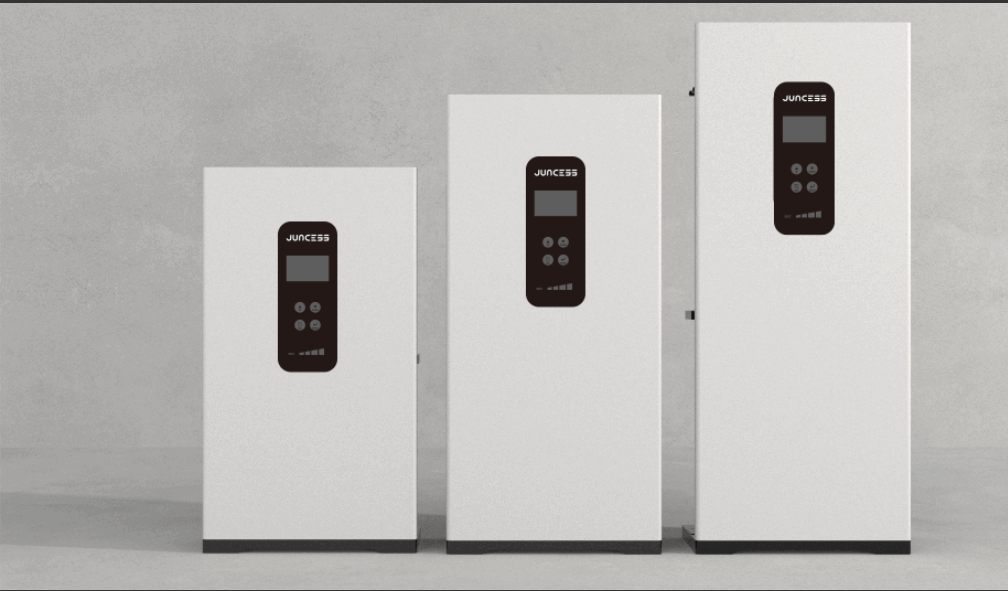
Energy storage battery pack: It is necessary to select an appropriate battery pack capacity based on the actual household power demand. Generally, deep-cycle lead-acid batteries or lithium-ion batteries with a capacity of 100Ah-200Ah are used.
Solar charge controller: A suitable solar charge controller needs to be selected, which is responsible for regulating the power conversion between the solar panels and the battery pack.
Cables and accessories: Including connecting cables between solar panels, inverters and battery packs, mounting brackets, junction boxes, etc.
Monitoring system: Used to monitor the working status of the solar energy storage system, including the power output of photovoltaic panels, the state of charge of the battery pack, etc.
Safety equipment: Including lightning protection devices, short-circuit protectors, overload protectors and other safety devices.




International Headquarters :
No. 801 Huagang Road, Wujiang Economic and Technological Development Zone, Suzhou City, Jiangsu Province, China
Global Customer Service Center:
Room 1101, Building 7, Phase 2, Nan'an Xindi, Suzhou Industrial Park, Jiangsu Province, China
No.20306 & 20307, 1st Street, 2nd Floor, East No.3 Gate, Zone 2, Yiwu International Trade City, Zhejiang Province, China
3rd Floor, Plaza No. 157, Main Boulevard, Sector C, DHA Phase 6, Lahore, Pakistan
No. 65A Rustaveli Street, Yakasaray District, Tashkent, Uzbekistan
