

 +400-8110278

 International Headquarters:
No. 801 Huagang Road, Wujiang Economic and Technological Development Zone, Suzhou City, Jiangsu Province, China
Global Customer Service Center:
Room 1101, Building 7, Phase 2, Nan'an Xindi, Suzhou Industrial Park, Jiangsu Province, China
No.20306 & 20307, 1st Street, 2nd Floor, East No.3 Gate, Zone 2, Yiwu International Trade City, Zhejiang Province, China
3rd Floor, Plaza No. 157, Main Boulevard, Sector C, DHA Phase 6, Lahore, Pakistan
No. 65A Rustaveli Street, Yakasaray District, Tashkent, Uzbekistan
Can photovoltaic (PV) systems still generate electricity on cloudy and rainy days
You’ve probably heard claims like “Solar panels on cloudy days are just for show” or “Continuous rain will cause a power outage.” Can photovoltaic (PV) systems still generate electricity on overcast and rainy days? The answer is yes, but the power output is only 10%–25% of what it produces on a sunny day. After 5 consecutive days of rain, some users wonder, “Is there something wrong with my panels? The electricity meter barely moves.” In fact, nothing is broken — PV panels rely on light rather than heat. Clouds weaken direct sunlight on rainy days, but scattered and diffused reflected light can still keep the modules working, though the output drops significantly. This is the biggest misunderstanding most people have about solar energy: assuming no strong sunlight means zero power generation.
On cloudy and rainy days, PV systems can still generate electricity, with output roughly 10%–25% of sunny-day levels; they run on scattered (diffused reflected) light that passes through clouds, rather than direct sunlight.
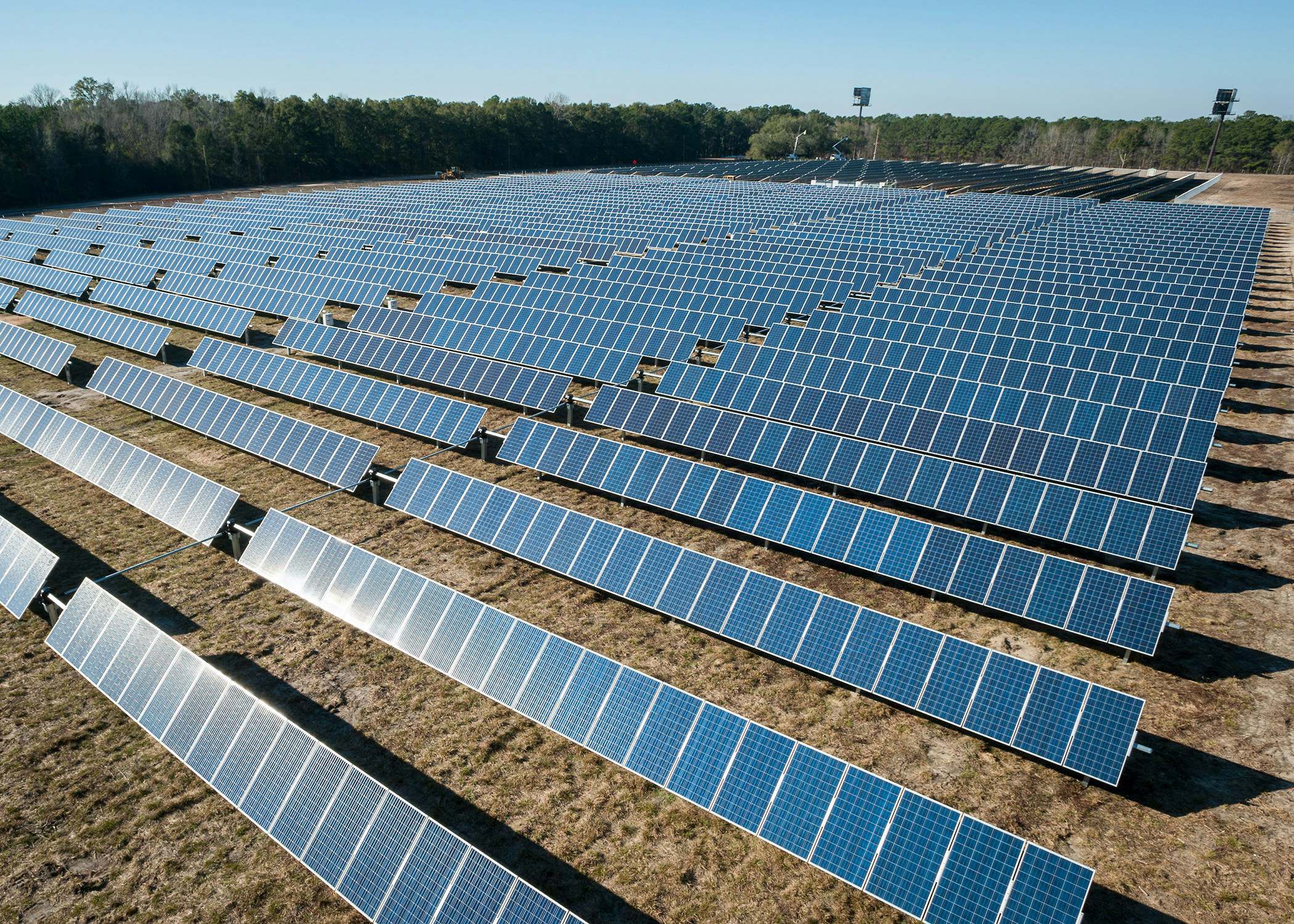
For a 10kW residential system: around 45 kWh per sunny day, 5–15 kWh per cloudy day; roughly 63 kWh over a full week of continuous rain, which is only 20% of the 315 kWh generated in a full sunny week.
Low temperatures actually benefit efficiency: the module power temperature coefficient is about −0.35%/℃. The cool weather on rainy days can slightly offset the lack of sunlight, but weak light remains the dominant limiting factor.
N-type modules (TOPCon/HJT) have significantly better low-light performance than P-type PERC modules; bifacial modules can capture an extra 5%–15% of power on cloudy days using ground-reflected light.
Pure grid-tied systems will not lose power because the grid acts as a backup; systems equipped with energy storage batteries or operating off-grid can continue to supply power during grid outages.
PV relies on light, not heat
Many people equate solar energy with “scorching sun exposure”, which is the first wrong assumption. The photovoltaic effect occurs at the semiconductor PN junction: as long as photons hit the silicon wafer to excite electrons, an electric current is generated, which has nothing to do with air temperature. In fact, higher temperatures reduce efficiency (see Section 5).
Clouds break “direct sunlight” into “scattered/diffused reflected light”. Sunlight on a sunny day is like a flashlight shining directly, while light on a rainy day is like the diffused lighting in a room — the intensity is lower, but the light still exists. The front glass and anti-reflective coating of modules are designed to capture light from all angles, so even without harsh direct sunlight, PV modules can still generate electricity under low-light conditions, with power decreasing linearly with irradiance. A common misconception is that “rain covers the panel surface”. In reality, raindrops hitting the panel will conveniently wash away dust.
Key influencing factors
Positive temperature effect (counterintuitive point): For mainstream crystalline silicon modules, the power temperature coefficient is about −0.35%/℃, meaning lower temperatures bring higher efficiency. The cool weather on rainy days puts modules in “better condition” than at noon in midsummer — this gain can slightly make up for insufficient sunlight. But do not reverse the logic: weak light is the main limiting factor, temperature only provides a marginal boost, and the net result is still lower power generation.
MPPT tracking efficiency: Irradiance fluctuates greatly on cloudy days. Whether the multi-channel MPPT of the inverter can quickly track the “maximum power point” determines how much power loss you can avoid. Models with multi-channel MPPT and optimized algorithms are more stable in low-light conditions, and the related differences are detailed in the PV inverter selection guide.
Rain cleans the panel surface: Rain is not an enemy. Dust and bird droppings can reduce light transmittance by several percentage points, while a rainstorm provides free cleaning, often leading to a “small power peak” right after the rain stops and the sun returns. In areas with little rainfall for long periods, you need to actively rinse the panels.




International Headquarters :
No. 801 Huagang Road, Wujiang Economic and Technological Development Zone, Suzhou City, Jiangsu Province, China
Global Customer Service Center:
Room 1101, Building 7, Phase 2, Nan'an Xindi, Suzhou Industrial Park, Jiangsu Province, China
No.20306 & 20307, 1st Street, 2nd Floor, East No.3 Gate, Zone 2, Yiwu International Trade City, Zhejiang Province, China
3rd Floor, Plaza No. 157, Main Boulevard, Sector C, DHA Phase 6, Lahore, Pakistan
No. 65A Rustaveli Street, Yakasaray District, Tashkent, Uzbekistan
