

 +400-8110278

 International Headquarters:
No. 801 Huagang Road, Wujiang Economic and Technological Development Zone, Suzhou City, Jiangsu Province, China
Global Customer Service Center:
Room 1101, Building 7, Phase 2, Nan'an Xindi, Suzhou Industrial Park, Jiangsu Province, China
No.20306 & 20307, 1st Street, 2nd Floor, East No.3 Gate, Zone 2, Yiwu International Trade City, Zhejiang Province, China
3rd Floor, Plaza No. 157, Main Boulevard, Sector C, DHA Phase 6, Lahore, Pakistan
No. 65A Rustaveli Street, Yakasaray District, Tashkent, Uzbekistan
655W vs 670W Solar Modules: Power Output and Project Planning
Selecting solar modules for a photovoltaic project involves more than comparing the wattage printed on the product label. Module efficiency, available installation area, electrical characteristics, inverter compatibility, and mechanical requirements all influence the final system design. For distributors, EPC contractors, and project developers, understanding these factors before confirming a module specification can help simplify procurement and reduce design changes later.
The Hi-MO X10 Scientist LR7-72HVH 655-670M series offers four rated power options: 655W, 660W, 665W, and 670W. These modules provide a useful comparison for buyers deciding whether a higher power rating will benefit their planned installation. Although the difference between 655W and 670W is only 15W per module, the cumulative difference can become meaningful when a project involves hundreds or thousands of panels.
Jiangsu Juncess Energy Co., Ltd. works across photovoltaic module trading, energy storage, and integrated solar-storage solutions. With 11 years of experience in the new energy sector and a global network of more than 400 long-term strategic partners, the company supports customers evaluating equipment options for different project requirements.
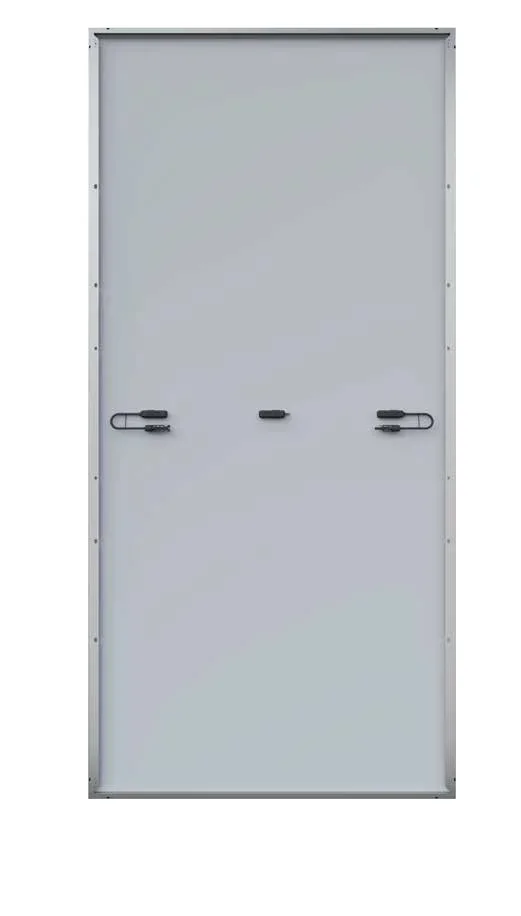
655W vs 670W: Understanding the Power Difference
The most direct difference between these two module options is their maximum rated power under Standard Test Conditions (STC). The 655W version has a rated output of 655W, while the 670W version reaches 670W under the same standard testing conditions.
The difference is 15W per module, equivalent to approximately 2.29% more rated power for the 670W option compared with the 655W version.
For a project using 1,000 modules, the comparison is straightforward:
| Parameter | 655W Module | 670W Module |
|---|---|---|
| Rated power per module | 655W | 670W |
| Module quantity | 1,000 | 1,000 |
| Total rated DC capacity | 655kW | 670kW |
| Capacity difference | — | 15kW |
| Relative increase over 655W | — | Approximately 2.29% |
This calculation illustrates the difference in installed DC nameplate capacity when the module count remains constant. It does not mean the 670W configuration will necessarily generate 2.29% more electricity over a year. Actual energy production depends on factors such as solar irradiance, module temperature, orientation, shading, system losses, inverter operation, and local weather conditions.
For projects with a fixed number of module positions, the higher-rated option can increase the installed DC capacity without increasing the module count. This makes rated power an important consideration when planning large installations or working within a defined mounting area.
How Module Efficiency Affects Installation Planning
Rated power is only one part of the comparison. Module efficiency also matters, particularly when the available roof or ground area limits the number of panels that can be installed.
According to the supplied technical data, the four module variants have the following efficiencies:
| Module Model | Rated Power | Module Efficiency |
|---|---|---|
| LR7-72HYH-655M | 655W | 24.2% |
| LR7-72HYH-660M | 660W | 24.4% |
| LR7-72HYH-665M | 665W | 24.6% |
| LR7-72HYH-670M | 670W | 24.8% |
The 670W module combines the highest rated output with the highest listed efficiency in this range. For projects with restricted installation space, these characteristics may help developers evaluate how much nominal capacity can be accommodated within the available area.
The listed module dimensions are 2,382 × 1,134 × 30mm, with a weight of 28.5kg. The external dimensions are the same across the specified power range in the supplied data, allowing planners to compare the rated capacity of different variants without assuming a larger module footprint for the 670W version.
However, final installation planning should account for more than panel dimensions. Access routes, maintenance clearances, mounting structures, roof loading limits, wind conditions, and required spacing between module rows can all affect the number of panels that fit within a project site.
For commercial and utility-scale projects, developers should evaluate module efficiency alongside layout drawings and structural calculations rather than selecting a product solely because it has the highest wattage.
Electrical Parameters and Inverter Compatibility
A higher module power rating does not automatically make a module suitable for every inverter or string configuration. Voltage and current characteristics must also match the system's electrical design.
The supplied STC data for the 655W and 670W versions is summarized below.
| Electrical Parameter | 655W Module | 670W Module |
|---|---|---|
| Maximum power (Pmax) | 655W | 670W |
| Open-circuit voltage (Voc) | 54.00V | 54.30V |
| Short-circuit current (Isc) | 15.37A | 15.61A |
| Voltage at maximum power (Vmp) | 44.66V | 44.96V |
| Current at maximum power (Imp) | 14.67A | 14.91A |
The 670W version has higher listed operating voltage and current values than the 655W version. During system design, engineers should verify that these electrical characteristics are compatible with the selected inverter, string arrangement, connectors, cables, and protection devices.
For example, the maximum DC system voltage listed for the module is 1,500V under IEC specifications, and the maximum series fuse rating is 25A. These values are important design references, but they should not be used in isolation to determine the permitted string length or fuse selection.
The maximum number of modules connected in series must be calculated using the module's open-circuit voltage under the project's minimum design temperature, the inverter's maximum DC input voltage, and applicable electrical regulations. Current limits must also be checked against the inverter's input specifications and the requirements for parallel strings.
The product data provides electrical characteristics under both STC and Nominal Operating Cell Temperature (NOCT) conditions. These represent different test conditions, so the values should not be compared as if they were measured under identical circumstances. Actual field performance will vary with operating conditions.
Temperature Performance and Real-World Energy Generation
Solar modules do not operate at their rated STC power continuously. Cell temperature, sunlight intensity, wind, and installation conditions influence their output throughout the day.
The supplied data lists a maximum power temperature coefficient of -0.260%/°C for the module series. This indicates that maximum power generally decreases as cell temperature rises above the reference temperature, all else being equal.
As an illustrative calculation, a 670W module operating at a cell temperature of 45°C would be 20°C above the 25°C STC reference. Applying the stated temperature coefficient gives an approximate temperature-related power reduction of 5.2%, or about 34.8W. The resulting estimated power would be approximately 635W under the simplified calculation, assuming the same irradiance and other relevant conditions.
This is an illustrative estimate rather than a prediction of actual field output. Irradiance, wind, mounting configuration, and other operating factors also affect performance. The listed NOCT power of 510W for the 670W variant is measured under a different set of test conditions and should not be treated as the expected output at every site temperature.
When comparing the 655W and 670W options, project developers should consider the expected operating environment alongside rated power. A complete energy-yield assessment should use location-specific weather data, system configuration, shading analysis, and appropriate simulation assumptions.
Mechanical Design and Installation Requirements
Mechanical specifications are another important part of module selection. A panel with a higher rated output still needs to meet the project's structural and environmental requirements.
The supplied specifications list the following characteristics for the Hi-MO X10 series:
Front-side maximum static loading: 5,400Pa
Rear-side maximum static loading: 2,400Pa
Hail test: 25mm hailstones at a speed of 23m/s
Operating temperature range: -40°C to +85°C
Junction box protection: IP68, with three diodes
Glass: 3.2mm coated tempered glass
Frame: Anodized aluminum alloy
These values can help engineers begin their technical review, but the final installation design must follow the applicable product documentation and local requirements. Static load ratings should not be interpreted as a guarantee of suitability for every wind, snow, mounting, or clamping condition.
The installation team should verify approved mounting zones, clamp positions, rail spacing, fastener requirements, and structural support. The stated hail test condition also does not establish resistance to every possible hail event.
For projects exposed to demanding environmental conditions, reviewing the module's detailed installation manual and relevant test documentation is an important step before finalizing the mounting system.
Planning Module Quantities, Capacity, and Logistics
Module selection affects procurement planning as well as electrical design. The 655W and 670W options can produce different total DC capacities with the same number of panels, while the number of panels required for a target capacity also differs.
For a nominal 1MW DC array, a simplified calculation gives the following quantities:
| Module Rating | Approximate Quantity for 1MW DC | Actual Nameplate Capacity |
|---|---|---|
| 655W | 1,527 modules | 1,000.185kW |
| 670W | 1,493 modules | 1,000.31kW |
These calculations round the required module count up to the next whole panel. They show that the higher-rated module can achieve a similar target DC capacity with fewer modules. However, the final layout must also account for string lengths, inverter limits, array configuration, and the project's actual capacity target.
The supplied packaging information lists 36 modules per pallet, 144 modules per 20-foot general-purpose container, and 720 modules per 40-foot high-cube container. These quantities provide a starting point for logistics discussions, but final loading plans should be confirmed with the supplier and logistics provider.
Jiangsu Juncess Energy Co., Ltd. has developed overseas channel operations across Asia, Europe, Africa, the Middle East, and Australia, with established market experience in Pakistan and Central Asia and expansion plans for additional markets. This international business background is relevant when coordinating module procurement, delivery schedules, and project requirements across different markets.
Choosing the Right Option for Your PV Project
There is no universal rule that makes 670W the best choice for every installation. The appropriate option depends on the project's capacity target, available area, inverter configuration, structural constraints, procurement plan, and expected operating conditions.
The 655W module may suit a design that has already been engineered around its electrical characteristics or where the project team is comparing several available module specifications. The 670W version offers a higher rated output per panel and a listed efficiency of 24.8%, which can be useful when maximizing nominal capacity within a fixed module count or installation area.
The 660W and 665W variants provide intermediate options for projects that need to balance module specifications with system design requirements. Rather than assuming that a small increase in wattage will automatically improve overall project economics, buyers should compare complete system designs and evaluate expected energy production using consistent assumptions.
Jiangsu Juncess Energy Co., Ltd. combines photovoltaic trading experience with energy storage manufacturing capabilities and solar-storage integration expertise. The company reports an energy storage production capacity of 1.5GWh and focuses on integrating photovoltaic and storage technologies into practical energy solutions. For projects considering both solar generation and storage, module selection should be coordinated with the wider system design rather than treated as an isolated purchasing decision.
Final Considerations
Comparing 655W and 670W solar modules starts with a clear difference: 15W of additional rated power per panel, or approximately 2.29% relative to the 655W rating. Across a large installation, this can affect total nameplate capacity and the number of modules required to reach a target DC rating.
However, a sound selection process also examines module efficiency, electrical compatibility, temperature characteristics, mechanical loading, site conditions, and delivery planning. These factors determine whether the higher-rated module is appropriate for the actual project.
The Hi-MO X10 Scientist LR7-72HVH 655-670M series offers four power options from 655W to 670W, with listed module efficiencies from 24.2% to 24.8%. By comparing the specifications against project-specific requirements, buyers can make a more informed decision about the right configuration.
For module selection and solar-storage project discussions, Jiangsu Juncess Energy Co., Ltd. can support buyers in evaluating photovoltaic products and coordinating their requirements with broader energy system plans. Reviewing the product specifications, confirming the exact module model, and completing the relevant engineering checks are practical steps toward a well-planned PV installation.




International Headquarters :
No. 801 Huagang Road, Wujiang Economic and Technological Development Zone, Suzhou City, Jiangsu Province, China
Global Customer Service Center:
Room 1101, Building 7, Phase 2, Nan'an Xindi, Suzhou Industrial Park, Jiangsu Province, China
No.20306 & 20307, 1st Street, 2nd Floor, East No.3 Gate, Zone 2, Yiwu International Trade City, Zhejiang Province, China
3rd Floor, Plaza No. 157, Main Boulevard, Sector C, DHA Phase 6, Lahore, Pakistan
No. 65A Rustaveli Street, Yakasaray District, Tashkent, Uzbekistan
