

 +400-8110278

 International Headquarters:
No. 801 Huagang Road, Wujiang Economic and Technological Development Zone, Suzhou City, Jiangsu Province, China
Global Customer Service Center:
Room 1101, Building 7, Phase 2, Nan'an Xindi, Suzhou Industrial Park, Jiangsu Province, China
No.20306 & 20307, 1st Street, 2nd Floor, East No.3 Gate, Zone 2, Yiwu International Trade City, Zhejiang Province, China
3rd Floor, Plaza No. 157, Main Boulevard, Sector C, DHA Phase 6, Lahore, Pakistan
No. 65A Rustaveli Street, Yakasaray District, Tashkent, Uzbekistan
How Long Is the Service Life of an All-in-One Energy Storage System
For mainstream LFP all-in-one energy storage systems, they support 3000–6000 charge-discharge cycles with a calendar life of 10–15 years. After 10 years of normal operation, they still retain 70%–80% of their original capacity. The standard warranty usually covers 10 years or 6000 cycles, whichever comes first.
Grid-tied systems: Connected to the public grid, support feed-in tariff and feature low cost, but standard models shut down immediately once the grid loses power.
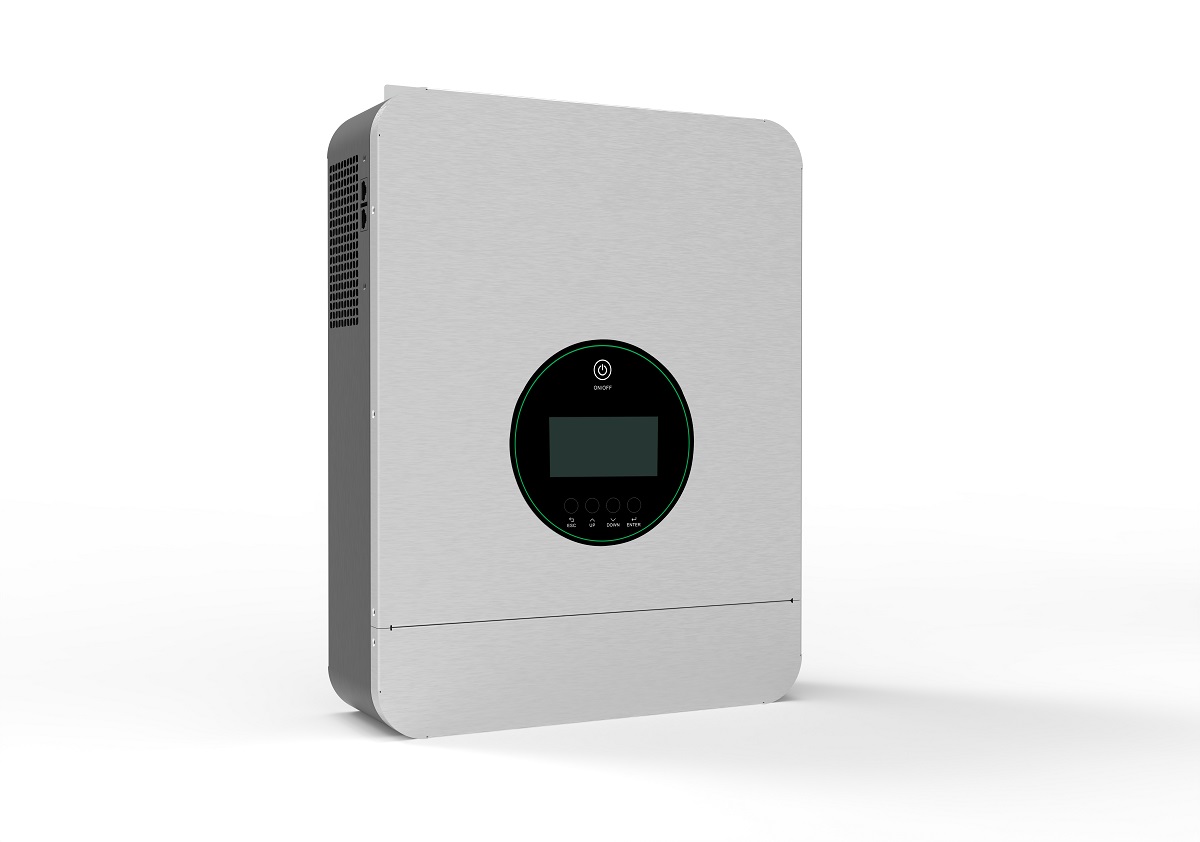
Off-grid systems: Fully disconnected from the public grid, rely entirely on large battery packs for power supply, leading to higher overall cost.
Hybrid systems: Combine the advantages of both, making them the top choice for most users.
Sodium-Ion Battery vs. LFP: How to Choose?
Lithium Iron Phosphate (LFP) features mature technology, long cycle life and low cost, making it the absolute mainstream on the current market. Sodium-ion batteries deliver better low-temperature performance and rely on more abundant raw materials, but their cycle life and industrial chain maturity are still catching up. For large-scale residential use, LFP is still the recommended priority; you may follow the progress of sodium-ion batteries for special low-temperature scenarios.
4 Common Misconceptions
Misconception 1: "The system will lose power on rainy and cloudy days."
Standard grid-tied systems still generate power on cloudy and rainy days (just at a lower output), and the public grid always acts as a reliable backup, so power loss caused by weather will not happen. Only when the public grid itself fails will ordinary grid-tied units shut down for safety reasons — this has nothing to do with rainy weather. The solution is to equip the system with energy storage or adopt an off-grid design.
Misconception 2: "No power generation at all without sunlight."
This is wrong. As long as it is not deep at night, there is always scattered light on the ground, and the modules will still produce power output.
Misconception 3: "Higher temperature brings more power generation."
The opposite is true. High temperature will reduce the power generation efficiency. On clear, cold winter days, the per-watt output of the modules is even higher.
Misconception 4: "Rain will damage the modules or cause electric leakage."
PV modules are rated IP67 for protection, with insulation design on the DC side, making them completely safe in rain. The real risks to watch out for are long-term water accumulation that blocks the modules and aging of the junction box.




International Headquarters :
No. 801 Huagang Road, Wujiang Economic and Technological Development Zone, Suzhou City, Jiangsu Province, China
Global Customer Service Center:
Room 1101, Building 7, Phase 2, Nan'an Xindi, Suzhou Industrial Park, Jiangsu Province, China
No.20306 & 20307, 1st Street, 2nd Floor, East No.3 Gate, Zone 2, Yiwu International Trade City, Zhejiang Province, China
3rd Floor, Plaza No. 157, Main Boulevard, Sector C, DHA Phase 6, Lahore, Pakistan
No. 65A Rustaveli Street, Yakasaray District, Tashkent, Uzbekistan
