

 +400-8110278

 International Headquarters:
No. 801 Huagang Road, Wujiang Economic and Technological Development Zone, Suzhou City, Jiangsu Province, China
Global Customer Service Center:
Room 1101, Building 7, Phase 2, Nan'an Xindi, Suzhou Industrial Park, Jiangsu Province, China
No.20306 & 20307, 1st Street, 2nd Floor, East No.3 Gate, Zone 2, Yiwu International Trade City, Zhejiang Province, China
3rd Floor, Plaza No. 157, Main Boulevard, Sector C, DHA Phase 6, Lahore, Pakistan
No. 65A Rustaveli Street, Yakasaray District, Tashkent, Uzbekistan
How to match the capacities of photovoltaic and energy storage systems
There is no universal ratio. The power (kW) depends on the peak power you need to curtail, while the capacity (kWh) is determined by the duration of backup support you require. For industrial and commercial scenarios, 2-hour or 4-hour systems are the mainstream; for residential use, it is usually sufficient to cover the basic nighttime load. Over-sizing will lead to peak curtailment losses: a ratio of 1.2–1.3 usually results in a loss below 2%, 1.5 brings about a loss of 2%–5%, and in high-irradiance areas, a ratio exceeding 1.6 may cause a loss of 5%–8%. The evaluation criterion is not maximum power generation, but maximum Net Present Value (NPV).
The 2-hour system has a low investment threshold and is the current mainstream (in 2026, 2-hour and 4-hour systems together account for 94.55% of the market share); the 4-hour system has a lower cost per Wh, making it suitable for scenarios with large price spreads or requirements to participate in the capacity market. DC-coupled systems can directly store the curtailed peak power into the battery, so they can tolerate a higher capacity ratio (1.5–1.8); for AC-coupled systems, peak curtailment is completed at the inverter, and the excess power cannot be accessed by the battery, so a high ratio will cause actual waste.
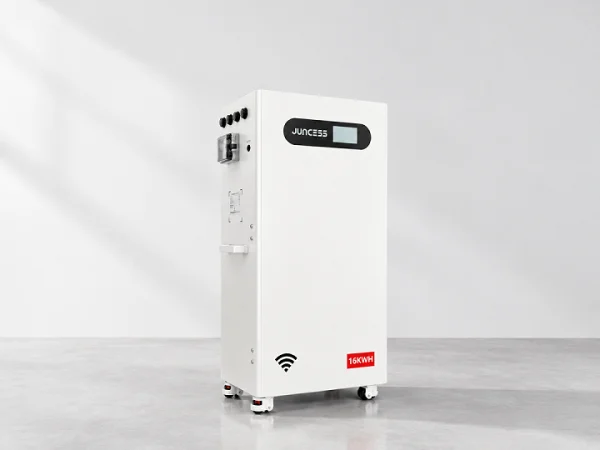
Over-sizing is limited by the specifications on the DC side of the inverter, and the ratio cannot be set arbitrarily. It is necessary to check the maximum DC input power, MPPT voltage window, and maximum input current of the inverter (the short-circuit current of the modules should be less than 1/1.25 of the inverter's withstand value). The upper limit of DC over-sizing capacity varies among mainstream hybrid inverters: SolarEdge EnergyHub can reach 200%, Sungrow SH-RT series is 150%, and GoodWe ET PLUS+ series ranges from 150% to 200% (refer to the datasheet of the specific model for details).
Three Ratios, Three Questions
Ratio | Formula | Question it answers | Typical range |
DC/AC ratio | PV array DC capacity (kWp) ÷ inverter AC rating (kW) | How much should I oversize the array, and what will clipping cost me? | 1.1–1.8 (by resource zone) |
Storage-to-PV ratio | Battery capacity (kWh) ÷ PV capacity (kWp) | How many hours of solar output can I store? | 0.1–1.0 hour-equivalent |
C-rate | PCS power (kW) ÷ battery capacity (kWh) | How fast can the battery charge and discharge? | 0.25C–1C |
One conversion worth memorising: storage duration (hours) = battery kWh ÷ PCS kW = 1 ÷ C-rate. A 0.5C system is a 2-hour system; a 0.25C system is a 4-hour system. These are two ways of saying the same thing.
How much power generation will be lost at a capacity ratio of 1.5?
The empirical range is approximately 2%–5%, depending on irradiation conditions, temperature, and the degradation status of the modules. If paired with DC-coupled energy storage, most of this curtailed power can be recovered by the battery, making the net loss significantly lower than the above range. Most residential systems only guarantee basic circuits such as lighting, refrigerators, and networks; for industrial and commercial scenarios that need to cover the full-plant load, a dedicated off-grid switching and seamless grid-off/grid-tied switching (UPS-level) solution is required.
Under the DC-coupled architecture, the hybrid inverter can access the full DC-side current. When the output of the modules exceeds the AC rated value of the inverter, the excess DC power does not need to be curtailed, but is directly transferred to the battery via DC-DC. AC-coupled systems cannot achieve this — the string inverter completes peak curtailment at its AC rated value, and the battery inverter is located downstream of the curtailment point, so it cannot obtain that part of the power; to access this power, the capacity of the string inverter has to be increased, which offsets the benefits of over-sizing.




International Headquarters :
No. 801 Huagang Road, Wujiang Economic and Technological Development Zone, Suzhou City, Jiangsu Province, China
Global Customer Service Center:
Room 1101, Building 7, Phase 2, Nan'an Xindi, Suzhou Industrial Park, Jiangsu Province, China
No.20306 & 20307, 1st Street, 2nd Floor, East No.3 Gate, Zone 2, Yiwu International Trade City, Zhejiang Province, China
3rd Floor, Plaza No. 157, Main Boulevard, Sector C, DHA Phase 6, Lahore, Pakistan
No. 65A Rustaveli Street, Yakasaray District, Tashkent, Uzbekistan
