

 +400-8110278

 International Headquarters:
No. 801 Huagang Road, Wujiang Economic and Technological Development Zone, Suzhou City, Jiangsu Province, China
Global Customer Service Center:
Room 1101, Building 7, Phase 2, Nan'an Xindi, Suzhou Industrial Park, Jiangsu Province, China
No.20306 & 20307, 1st Street, 2nd Floor, East No.3 Gate, Zone 2, Yiwu International Trade City, Zhejiang Province, China
3rd Floor, Plaza No. 157, Main Boulevard, Sector C, DHA Phase 6, Lahore, Pakistan
No. 65A Rustaveli Street, Yakasaray District, Tashkent, Uzbekistan
Select the Right Residential ESS Battery Capacity by Pinpointing Your Household's Core Needs
When selecting energy storage battery capacity, you only need to identify your household's core demands, take into account possible future scenarios such as adding high-power electrical appliances, expanding living space, or tightening local power rationing policies. Prioritize modular energy storage products, which allow you to expand capacity on demand later without replacing the entire system. This not only saves initial investment, but also adapts to long-term changes in power consumption demands.
For Households Ensuring Basic Living, Renters or Small-Sized Homes
Selection Criteria:
Wall-mounted (5kWh): Compact size with no floor space occupation, flexible installation, perfectly meeting core demands of "refrigerator + lighting + mobile phone/router charging", supporting continuous use for 2-3 days without pressure.
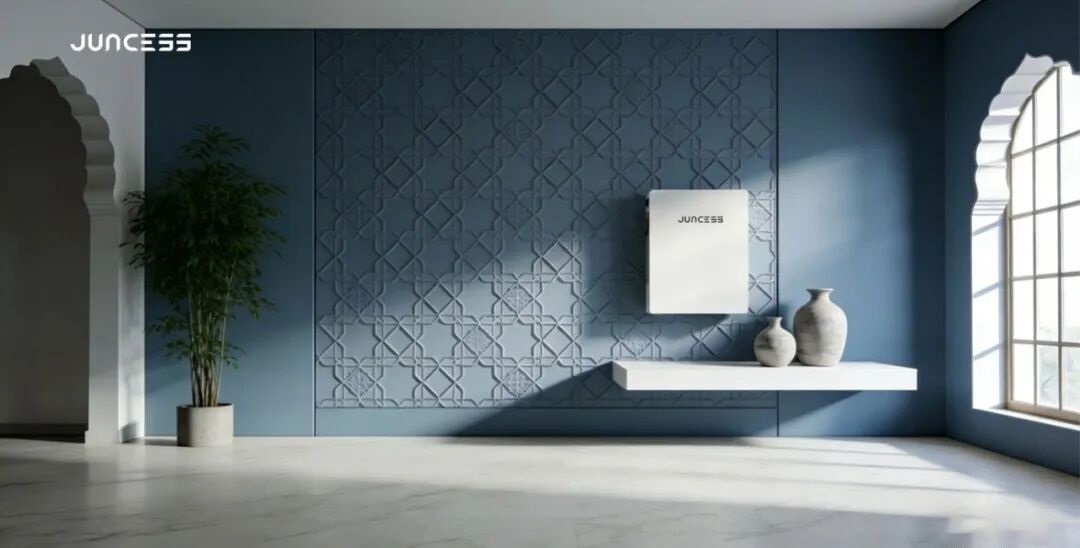
All-in-one hybrid energy storage system (5kWh): Strong adaptability, no need for extra complex components, plug-and-play, delivering top cost-effectiveness in emergency scenarios.
If you live in a two-bedroom apartment and want to power one more small appliance (such as a mini washing machine), you can upgrade to 11kWh for extra peace of mind with redundant power.
The 5kWh-class product can support a refrigerator (about 1kWh per day) + lighting (about 0.5kWh per night) + mobile phone charging (about 0.3kWh per day) + small electric water heater (about 1kWh for one emergency heating), fully covering emergency rigid demands. Small-capacity products also reduce initial investment without causing performance waste.
For Areas with Installed PV and Large Peak-Valley Electricity Price Gap
Selection Criteria:
3-5kW PV system: Choose 11kWh, which can store over 80% of the daytime power generation to meet the whole family's night power consumption.
5-8kW PV system: Choose 16kWh, which can cover full-day self-consumption, even cope with insufficient power generation on cloudy days, maximizing electricity bill savings.
Ordinary households have a daily power consumption of 3-5kWh. 11kWh/16kWh products can perfectly absorb the daytime PV generation, avoiding the waste of "excessive generation with insufficient self-use", while bypassing grid peak electricity prices, delivering extremely significant money-saving effects.
For 3-Story Villas or Families with Over 4 Members (High Power Load)
Selection Criteria:
Stackable energy storage battery (16kWh): Stackable structure with modular design, "plug-and-play" capacity expansion, perfectly suitable for 4-6 person families, covering the operation of all household electrical appliances at night.
Floor-standing energy storage battery (16kWh): Excellent heat dissipation performance, suitable for long-term high-load operation, running stably even with central air conditioners and electric water heaters.
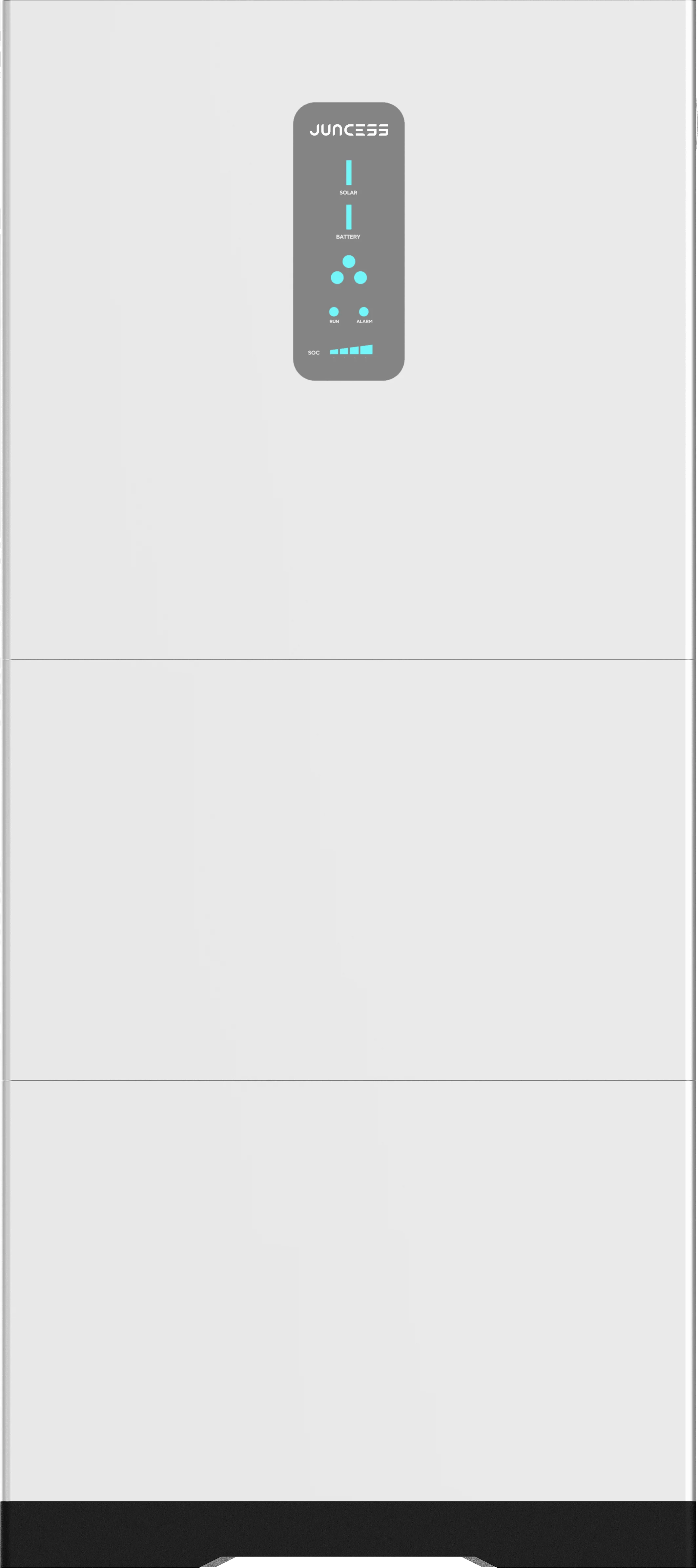
All-in-one energy storage system (16kWh): Wizard-guided site setup and commissioning for easy installation; batteries and smart meters support quick plug-and-play; built-in EPS (Emergency Power Supply) function enables fully automatic operation during power outages with no manual intervention required. The switching time is ≤10ms, achieving millisecond-level seamless switching for "zero perception of power outage".
Large-sized homes have a daily power consumption of 8-12kWh. 16-20kWh products can easily cover full-load night power consumption. Combined with daytime PV generation, electricity bills can be reduced by over 50% without any compromise on life quality.
For Standalone High-End Villas or Estates (Extremely High Power Load with Zero Power Interruption Requirement)
Selection Criteria:
60kWh (basic configuration), supporting modular expansion to 240kWh and above.
The 60kWh basic configuration can support 24/7 uninterrupted operation of core devices and meet the emergency charging demand of 1-2 EVs. After expanding to 240kWh and above, it can support full charging of more EVs, and cover 4-5 days of high-load power consumption for the whole family. Combined with daytime PV generation, it can not only avoid industrial & commercial peak electricity prices (most high-end villas are charged at commercial electricity rates), but also ensure that medical equipment, wine collection, EV range and other demands are not affected by power outages, without any compromise on high-end life quality.
For Households in Extreme Weather-Prone Areas (Typhoons, Heavy Rains), Rural/Mountainous Areas with Weak Grid Coverage (Large Voltage Fluctuations, Frequent Periodic Power Outages); Regions with Long-Term Scheduled Power Rationing Such as Pakistan and South Africa (2-6 Hours of Daily Outages, Even Months of Continuous Outages in Dry Seasons); Overseas Users in Regions with Special Grid Voltage Standards and Policy Compliance Requirements Such as Australia
Users in these scenarios prioritize "power supply stability" and "adaptability" — they need to meet the rigid power demands of the whole family during long-term outages (such as food freshness preservation, children's online classes, power supply for elderly medical devices), and avoid product inoperability caused by voltage mismatch or non-compliance with local policies. Prioritize off-grid energy storage systems, which support long-term independent operation. Even completely disconnected from the grid, they can ensure continuous operation of key devices such as refrigerators, air conditioners and medical ventilators for 3-4 days, eliminating the anxiety of food spoilage and life disruption caused by power outages.
For overseas households (such as in Australia): Choose region-specific products that meet local grid standards and policy requirements, which can be directly installed without extra modification. They can not only adapt to local voltage specifications, but also smoothly qualify for local subsidy policies, avoiding compliance risks.




International Headquarters :
No. 801 Huagang Road, Wujiang Economic and Technological Development Zone, Suzhou City, Jiangsu Province, China
Global Customer Service Center:
Room 1101, Building 7, Phase 2, Nan'an Xindi, Suzhou Industrial Park, Jiangsu Province, China
No.20306 & 20307, 1st Street, 2nd Floor, East No.3 Gate, Zone 2, Yiwu International Trade City, Zhejiang Province, China
3rd Floor, Plaza No. 157, Main Boulevard, Sector C, DHA Phase 6, Lahore, Pakistan
No. 65A Rustaveli Street, Yakasaray District, Tashkent, Uzbekistan
