

 +400-8110278

 International Headquarters:
No. 801 Huagang Road, Wujiang Economic and Technological Development Zone, Suzhou City, Jiangsu Province, China
Global Customer Service Center:
Room 1101, Building 7, Phase 2, Nan'an Xindi, Suzhou Industrial Park, Jiangsu Province, China
No.20306 & 20307, 1st Street, 2nd Floor, East No.3 Gate, Zone 2, Yiwu International Trade City, Zhejiang Province, China
3rd Floor, Plaza No. 157, Main Boulevard, Sector C, DHA Phase 6, Lahore, Pakistan
No. 65A Rustaveli Street, Yakasaray District, Tashkent, Uzbekistan
High-Voltage All-in-One ESS: How 10ms Backup Switching Works
When a grid interruption occurs, the most important question for many energy storage projects is not simply how much battery capacity is installed. It is how quickly the system can move from grid-connected operation to backup power. For loads that cannot tolerate a long interruption, switching time becomes a key system specification.
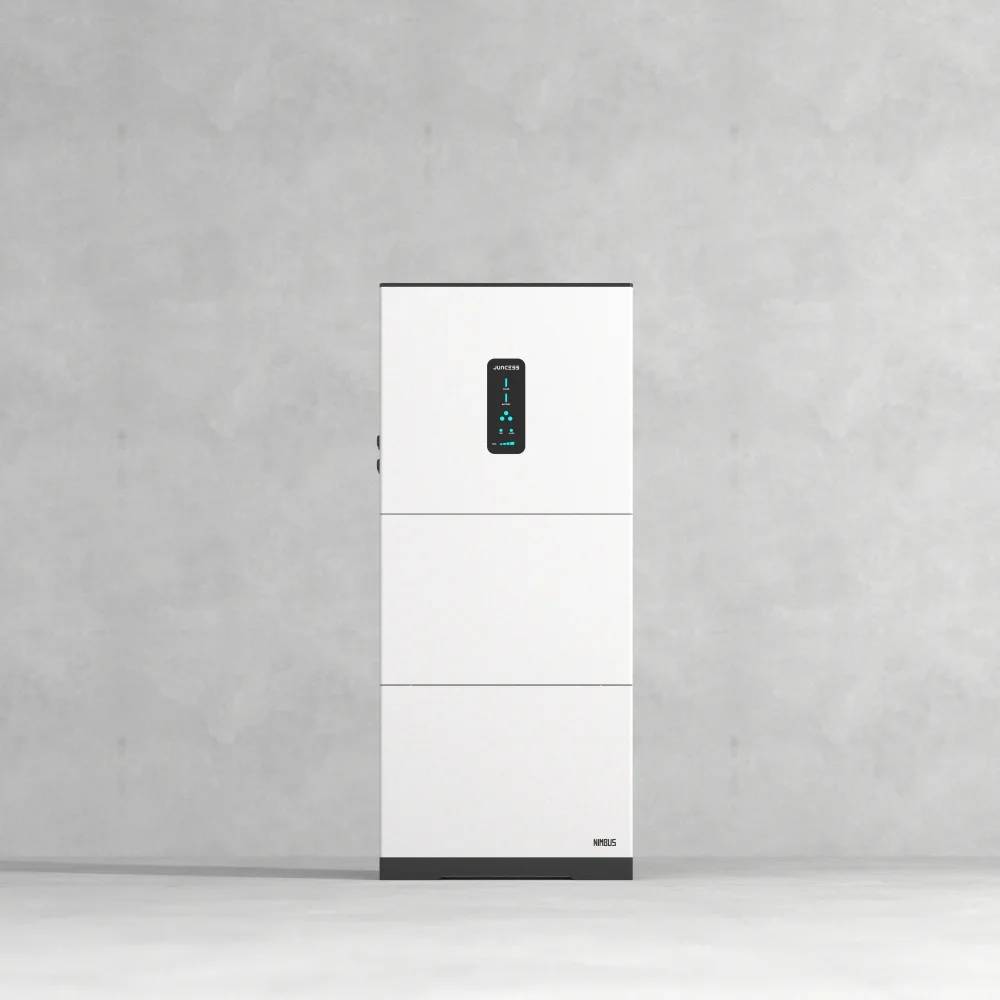
The All-in-One Energy Storage System from JUNCESS is designed with a maximum backup switching time of less than 10 ms. This capability is combined with a three-phase 400 V backup output, lithium iron phosphate batteries, integrated protection functions, and intelligent monitoring. Together, these features create an energy storage architecture that can respond quickly while keeping the system relatively simple to install and operate.
What Happens When the Grid Goes Down?
Under normal conditions, the energy storage system can operate with the utility grid while managing PV generation and battery charging or discharging. When the grid condition changes, the system needs to detect the abnormal condition, isolate the backup circuit from the grid, and establish the backup power supply.
This process involves more than simply turning on a battery. The inverter must control voltage and frequency while maintaining the required output characteristics for the connected loads.
For the JNH5T2 and JNH6T2 configurations, the backup output is rated at 400 V, 3/N/PE, with a frequency of 50 Hz or 60 Hz. The JNH5T2 provides 5000 VA of rated apparent power, while the JNH6T2 provides 6000 VA.
The specified maximum switching time is less than 10 ms. In practical system design, this figure provides an important reference for determining whether the backup output is suitable for a particular group of loads.
Why a Sub-10 ms Switching Time Matters
A short switching time reduces the duration of the power interruption experienced by connected equipment. This can be particularly relevant for electrical loads where even a brief interruption may affect operation, control processes, communication equipment, or other sensitive equipment.
However, switching time should not be considered in isolation. The load capacity of the backup circuit, starting characteristics of connected equipment, output voltage, frequency, and power quality all need to be evaluated.
The High-Voltage All-in-One ESS provides a 5 kVA or 6 kVA backup output depending on the selected model. The rated backup current at 400 V is 7.2 A for JNH5T2 and 8.7 A for JNH6T2. This gives system designers concrete electrical values to compare with the expected backup load.
For example, if a facility intends to place several loads on the backup circuit, the design team should first calculate their combined running power and consider whether any motors, pumps, compressors, or other equipment create higher starting demand. The less-than-10-ms switching specification does not replace this load assessment.
How the Battery Supports Backup Operation
The backup function ultimately depends on stored electrical energy. Both JNH5T2 and JNH6T2 use LFP battery technology, with a total battery capacity ranging from 5.32 kWh to 10.64 kWh depending on whether one or two battery packs are installed.
The nominal battery voltage is 102.4 V with one battery pack and 204.8 V with two packs. The maximum charging and discharging current is specified as 26 A.
This configuration allows the battery section to work with the inverter as an integrated energy system rather than requiring a separate battery cabinet and independently configured inverter in the basic installation.
Battery capacity and backup output should still be evaluated separately. A 6 kW backup output does not mean that a 10.64 kWh battery will automatically provide a fixed number of hours of backup. Actual runtime depends on the load level, battery operating limits, conversion efficiency, and other system conditions.
For project planning, it is more useful to calculate expected energy consumption during the backup period and then compare that requirement with the usable battery capacity.
PV Input Can Continue to Contribute Energy
Another important part of the system is the PV-side configuration. JNH5T2 supports a maximum PV input power of 7500 Wp, while JNH6T2 supports up to 9000 Wp.
The inverter has an operating voltage range of 60–1100 V and an MPPT voltage range of 150–950 V. The startup voltage is 180 V, with two MPPTs and one string per MPPT. Each MPPT supports up to 20 A input current and 30 A short-circuit current.
These specifications are useful when matching the system to a PV array. The PV string voltage and current should be checked against the inverter's operating and MPPT ranges rather than selecting modules only according to total installed wattage.
The MPPT efficiency is specified at 99.9%, while the maximum efficiency reaches 98.0% for JNH5T2 and 98.2% for JNH6T2. These figures help explain why the inverter section is important when evaluating the overall energy conversion chain.
Power Quality and Protection During Backup
Fast switching is only useful when the resulting backup supply also meets the electrical requirements of the connected equipment. The system specifies total voltage harmonic distortion below 3% at rated power for AC output, while backup output lists 2% THD at linear load.
The system also incorporates multiple protection functions. These include Type II surge protection, insulation resistance detection, PV reverse polarity protection, battery reverse polarity protection, ground fault detection, residual current detection, AC short-circuit protection, and anti-islanding protection.
Fire protection is provided through a perfluoro-2-methyl-3-pentanone fire suppression system. Combined with LFP battery technology and an SPCC enclosure, the design addresses several different aspects of equipment safety.
For an actual installation, these built-in functions should still be considered alongside local electrical codes, installation requirements, external protection devices, and the project's specific safety design.
A Practical Example of Backup Load Planning
Consider a site that wants to keep selected three-phase equipment operating during a grid outage. Instead of placing the entire facility on the backup output, the operator can identify the loads that are operationally important and calculate their combined demand.
Suppose the selected backup loads normally consume around 4 kW. A JNH5T2 with a 5000 VA backup rating may be a candidate based on its rated capacity, but the engineering review should also consider power factor, starting currents, operating patterns, and any additional loads that may be connected.
If the planned backup demand approaches the upper limit of the smaller model, the JNH6T2 provides a 6000 VA rated backup output and 8.7 A rated current at 400 V. The selection should be based on the actual electrical design rather than simply choosing the larger model.
This approach also prevents a common mistake in energy storage planning: sizing the battery only by kWh while overlooking the inverter's instantaneous power capability.
Installation and Monitoring Are Part of the System Design
The All-in-One Energy Storage System is designed to simplify installation by integrating the inverter and battery components into an overall system architecture. Battery and smart meter connections are designed for plug-and-play installation, while a wizard-based website setup and debugging process can simplify commissioning work.
The system uses CAN communication for BMS communication and RS485 for the smart meter interface. Internet communication is supported through Wi-Fi, LAN, or 4G.
The JUNCESS App adds an online monitoring interface, allowing users to view system information and manage energy operation without relying exclusively on local inspection. For distributed energy storage installations, this type of communication capability can reduce the need for routine on-site checks.
The equipment also uses natural convection cooling and has an IP65 protection rating. The specified operating temperature range is -25°C to +60°C, with operating altitude up to 3000 m; above 2000 m, power derating applies.
When to Consider a High-Voltage All-in-One ESS
A high-voltage all-in-one system can be particularly practical when a project needs PV input, battery storage, grid connection, and backup output within one coordinated platform.
The key evaluation points should include the required backup load, PV array configuration, battery capacity, grid voltage, operating frequency, installation environment, and communication requirements.
For JNH5T2, the combination of 7500 Wp maximum PV input, 5000 W rated AC output, and 5.32–10.64 kWh battery capacity provides one configuration range. JNH6T2 increases the corresponding PV input to 9000 Wp and rated AC output to 6000 W.
The physical configuration also changes with battery quantity. One inverter with one battery cabinet is listed at approximately 630 × 200.5 × 1036 mm and 90.1 kg, while the configuration with two battery cabinets reaches approximately 630 × 200.5 × 1417 mm and 139.1 kg. These dimensions and weights should be considered before equipment-room layout and transportation planning.
JUNCESS Approach to Integrated Energy Storage
Jiangsu Juncess Energy Co., Ltd. has 11 years of experience in the new energy sector, with capabilities covering R&D, manufacturing, channels, and energy solutions. The company has developed an energy storage production capacity of 1.5 GWh and works with more than 400 long-term strategic partners across multiple international markets.
Its experience spans photovoltaic and energy storage businesses, with market activity covering Asia, Europe, Africa, the Middle East, and Australia. The company also focuses on integrating photovoltaic, energy storage, AI technology, and digital energy management into integrated energy solutions.
For projects using the All-in-One Energy Storage System, this broader capability can be relevant when the requirement goes beyond equipment supply and involves PV-storage configuration, system integration, commissioning, or localized project support.
Final Takeaway
A backup system's value is not determined by battery capacity alone. Switching performance, inverter power, battery configuration, PV input, power quality, protection, and monitoring all contribute to how the system performs during an actual grid interruption.
With a specified maximum switching time of less than 10 ms, 400 V three-phase backup output, LFP battery technology, up to 10.64 kWh total battery capacity, and integrated monitoring and protection functions, the High-Voltage All-in-One ESS provides a compact architecture for projects that require coordinated PV, storage, grid, and backup functions.
For system designers, the most practical approach is to begin with the backup load and required operating time, then work backward through inverter capacity, battery energy, PV input, and installation conditions. That process turns the 10 ms switching specification from a headline number into one part of a complete and workable energy storage design.




International Headquarters :
No. 801 Huagang Road, Wujiang Economic and Technological Development Zone, Suzhou City, Jiangsu Province, China
Global Customer Service Center:
Room 1101, Building 7, Phase 2, Nan'an Xindi, Suzhou Industrial Park, Jiangsu Province, China
No.20306 & 20307, 1st Street, 2nd Floor, East No.3 Gate, Zone 2, Yiwu International Trade City, Zhejiang Province, China
3rd Floor, Plaza No. 157, Main Boulevard, Sector C, DHA Phase 6, Lahore, Pakistan
No. 65A Rustaveli Street, Yakasaray District, Tashkent, Uzbekistan
