

 +400-8110278

 International Headquarters:
No. 801 Huagang Road, Wujiang Economic and Technological Development Zone, Suzhou City, Jiangsu Province, China
Global Customer Service Center:
Room 1101, Building 7, Phase 2, Nan'an Xindi, Suzhou Industrial Park, Jiangsu Province, China
No.20306 & 20307, 1st Street, 2nd Floor, East No.3 Gate, Zone 2, Yiwu International Trade City, Zhejiang Province, China
3rd Floor, Plaza No. 157, Main Boulevard, Sector C, DHA Phase 6, Lahore, Pakistan
No. 65A Rustaveli Street, Yakasaray District, Tashkent, Uzbekistan
How to Choose Reliable All-in-One Energy Storage System Solutions from China
Choosing an all-in-one energy storage system from China is not only about comparing battery capacity or inverter power. For residential, commercial, off-grid and solar-storage projects, buyers need to look at the complete system: battery quality, inverter matching, PV charging ability, safety design, installation convenience, scalability and long-term supplier support.
As solar power becomes more widely used in homes, small businesses, farms, shops, telecom sites and remote facilities, many buyers prefer integrated energy storage systems instead of separate batteries, inverters and controllers. An all-in-one energy storage system combines key parts into one coordinated unit, making installation easier and reducing compatibility problems during project deployment.
For global buyers, China remains one of the most important sourcing markets for energy storage products. However, not every supplier offers the same level of product design, manufacturing experience or technical service. A reliable all-in-one energy storage system solution should be selected based on real application needs, not only product appearance or basic specifications.
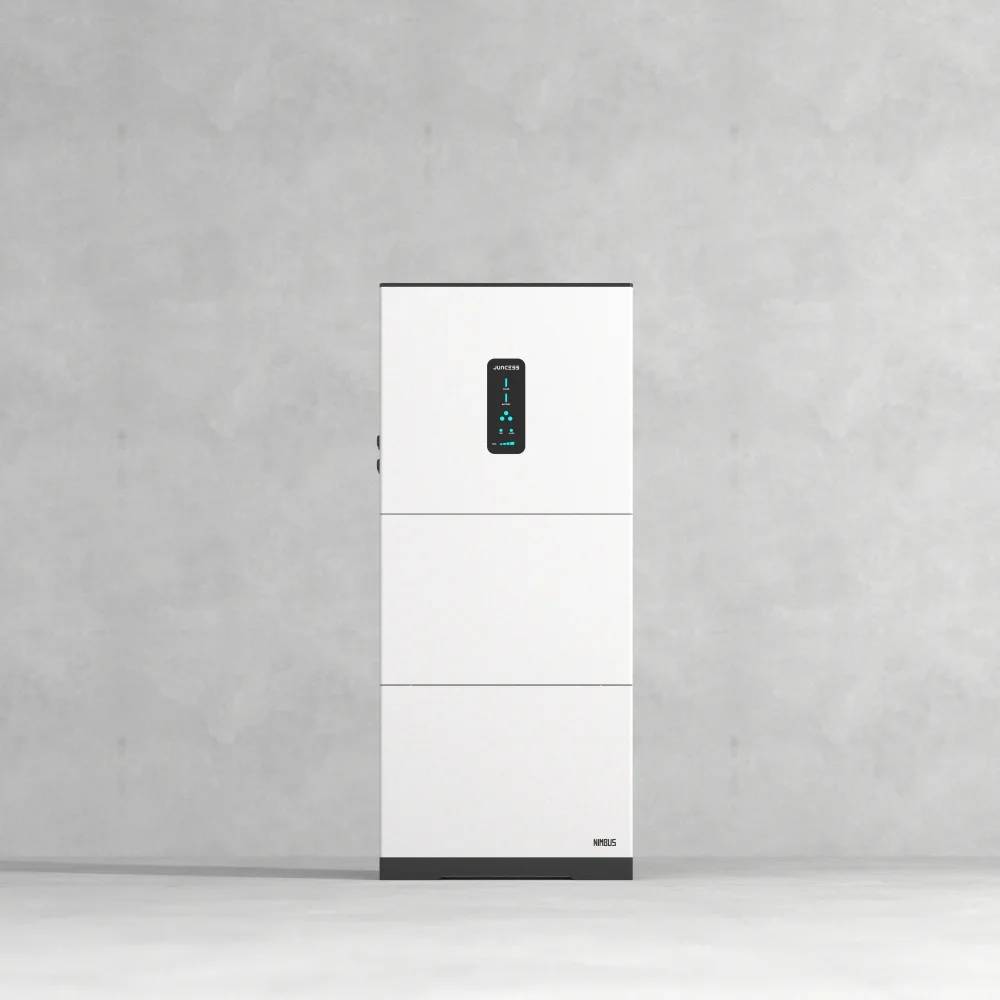
Juncess Energy provides all-in-one energy storage system solutions for off-grid and backup power applications, with product options designed for residential and commercial energy use. For buyers looking for a practical China supplier, the following points can help make the selection process clearer.
Start with the Actual Application Scenario
Before choosing a system, buyers should first define where and how the product will be used. A household backup system, a small shop power solution and a rural off-grid project may all use energy storage, but their operating requirements are different.
For residential users, the system often needs to support lighting, refrigerators, WiFi routers, computers, security systems and basic home appliances during power interruptions. In this case, stable output, quiet operation, compact structure and easy monitoring are important.
For small commercial users, the system may need to support payment terminals, office equipment, communication devices, refrigeration, lighting or basic business operations. A short outage can affect customer service, data access or daily workflow. Therefore, commercial buyers should pay more attention to rated load power, surge power and expansion capability.
For off-grid sites, PV charging ability becomes especially important. The system must be able to accept solar input efficiently, store energy during the day and release power when needed. This is why an integrated energy storage solution should be evaluated together with the PV system design.
Check Whether the System Is Truly Integrated
Some products are called “all-in-one,” but they may still require complicated external wiring or separate matching between batteries and inverters. A reliable all-in-one energy storage system should be designed as a complete platform, where the battery, inverter, solar charger, control logic and monitoring interface are developed to work together.
This matters because poor matching between components can cause unstable operation, communication issues or extra commissioning work. For installers and distributors, a truly integrated system helps reduce installation time and after-sales troubleshooting.
Juncess Energy’s off-grid all-in-one energy storage system is designed with easy installation as one of its key features. This is useful for projects where installers need repeatable deployment, especially in residential and small commercial markets. When buyers evaluate a supplier, they should ask whether the system has clear wiring guidance, installation drawings, operating instructions and technical support documents.
Pay Attention to Battery Chemistry and Cell Quality
Battery quality is one of the most important factors in energy storage selection. A lower-quality battery may look attractive at first, but it can create long-term risks in safety, performance consistency and cycle life.
For residential and commercial storage, LFP, or lithium iron phosphate battery technology, is widely used because it is known for stable performance and suitability for repeated charging and discharging. Juncess Energy’s all-in-one off-grid system uses LFP battery core technology and Grade A cells, which are important points for buyers who care about long-term reliability.
When sourcing from China, buyers should not only ask for the battery capacity. They should also check the battery type, cell grade, nominal voltage, capacity options, BMS protection design and expected design life. These details directly affect the system’s real value in daily use.
For projects that need long-term operation, it is also important to understand whether the supplier has stable production capability and quality control standards. Energy storage is not a short-life accessory; it is part of the customer’s power infrastructure.
Match Power Rating with Real Load Demand
Many buyers make the mistake of choosing an energy storage system only by battery capacity. In reality, rated load power and surge power are equally important.
Rated load power tells you how much equipment the system can support during normal operation. Surge power matters because some appliances or equipment require higher startup current, such as pumps, refrigerators, motors or certain commercial devices.
Juncess Energy’s all-in-one off-grid energy storage system offers different model options, including rated load power levels such as 3500W, 6000W and 11000W. This gives buyers more flexibility when selecting a system for different applications.
For residential use, a smaller system may be enough for essential backup power. For commercial or heavier off-grid use, a higher output model may be more suitable. The right choice should be based on a load list, not guesswork. Buyers should calculate the total power of essential devices and consider startup demand before confirming the model.
Evaluate Solar Charging Capability
For solar-storage projects, the energy storage system must work well with PV modules. A good system should support suitable PV array power, MPPT input and stable charging performance.
If the PV charging capacity is too limited, the battery may not recharge efficiently during the day. If the voltage range does not match the PV design, installers may face extra configuration problems. Therefore, solar input parameters should be reviewed carefully before ordering.
Juncess Energy’s all-in-one off-grid system supports solar charger functions and provides different PV input capacities depending on the model. This allows the system to be used in solar-powered homes, off-grid houses, rural businesses and distributed energy projects.
For buyers, the key is to match solar panel capacity, local sunlight conditions, battery capacity and daily load demand. A reliable supplier should be able to provide technical advice rather than only selling a standard model.
Consider Scalability for Future Expansion
Energy demand often changes after the first installation. A household may add more appliances. A shop may expand business hours. A commercial site may need to support more equipment later. If the system cannot be expanded, the user may need to replace the entire setup when demand increases.
Scalable expansion is one of the practical advantages of Juncess Energy’s all-in-one energy storage system. Some model configurations support parallel expansion, making it possible to increase system capacity for larger applications.
For distributors and project developers, scalability is also important for product planning. Instead of keeping many unrelated models, they can build solutions around a flexible product platform that supports different customer needs.
When evaluating a China supplier, buyers should ask whether parallel connection is supported, how many units can be connected, whether parallel output is available, and what technical conditions must be met during installation.
Look at Monitoring and User Operation
A modern energy storage system should not be difficult to understand. End users want to know whether the battery is charging, how much power remains, whether the system is operating normally and whether any warning needs attention.
Juncess Energy’s product supports JUNCESS App use, with optional WiFi module and Bluetooth App configuration. For homeowners and small business users, app-based monitoring can make daily operation more convenient.
For installers, monitoring also helps reduce after-sales pressure. If users can view system status clearly, they are less likely to misjudge normal operation as a product issue. When choosing a supplier, buyers should check whether the monitoring interface is practical, whether the app supports useful data display, and whether the system can be configured easily on site.
Review Safety and Protection Design
Energy storage safety should never be treated as a minor detail. Buyers need to check not only the battery type, but also the full safety design of the system. This includes temperature range, fire protection, IP level, battery management, electrical protection and installation environment.
Juncess Energy’s all-in-one off-grid energy storage system includes fire protection system information in its product parameters and provides operating temperature and storage temperature specifications. These details help buyers judge whether the product is suitable for the intended installation environment.
For residential and commercial projects, safety documentation, product certifications and clear installation guidance are important. A supplier that can provide complete technical information is usually easier to cooperate with in long-term projects.
Choose a Supplier with Manufacturing and Solution Capability
For energy storage buyers, supplier capability matters as much as product specifications. A reliable China all-in-one energy storage system supplier should understand both manufacturing and application solutions.
Juncess Energy has 11 years of experience in the new energy sector and has developed capabilities across channels, R&D, manufacturing and solutions. The company has expanded from photovoltaic module trading into the energy storage field and focuses on solar-storage integrated solutions for global customers.
This background is useful for buyers who need more than a single product. Many energy storage projects require system matching, application advice, technical communication and long-term cooperation. A supplier with solar and storage experience can better support customers in project planning and product selection.
Practical Checklist for Buyers
When comparing all-in-one energy storage system solutions from China, buyers can use the following checklist:
First, confirm the application: residential backup, commercial backup, off-grid use or solar-storage integration.
Second, check battery technology: battery type, cell grade, voltage, capacity, BMS protection and design life.
Third, review inverter performance: rated load power, surge power, output stability and transfer time.
Fourth, evaluate solar charging: PV array power, MPPT range, charging current and PV compatibility.
Fifth, check expansion ability: parallel support, future upgrade options and system flexibility.
Sixth, review installation and monitoring: wiring simplicity, app support, WiFi or Bluetooth options and user operation.
Seventh, confirm supplier support: product documentation, technical communication, manufacturing capability and after-sales service.
Conclusion
Choosing reliable all-in-one energy storage system solutions from China requires more than comparing product names or basic capacity. Buyers need to consider the full system structure, battery quality, inverter power, solar charging ability, scalability, safety design, monitoring function and supplier capability.
For residential, commercial and off-grid applications, an integrated system can simplify installation and improve energy management. Juncess Energy’s all-in-one off-grid energy storage system provides a practical option for buyers looking for LFP battery technology, scalable expansion, solar charging support and intelligent operation in one coordinated solution.
As global demand for clean energy and backup power continues to grow, reliable all-in-one energy storage systems will become an important part of solar-storage projects. For buyers sourcing from China, the right supplier should not only provide a product, but also support a complete and workable energy solution.




International Headquarters :
No. 801 Huagang Road, Wujiang Economic and Technological Development Zone, Suzhou City, Jiangsu Province, China
Global Customer Service Center:
Room 1101, Building 7, Phase 2, Nan'an Xindi, Suzhou Industrial Park, Jiangsu Province, China
No.20306 & 20307, 1st Street, 2nd Floor, East No.3 Gate, Zone 2, Yiwu International Trade City, Zhejiang Province, China
3rd Floor, Plaza No. 157, Main Boulevard, Sector C, DHA Phase 6, Lahore, Pakistan
No. 65A Rustaveli Street, Yakasaray District, Tashkent, Uzbekistan
