

 +400-8110278

 International Headquarters:
No. 801 Huagang Road, Wujiang Economic and Technological Development Zone, Suzhou City, Jiangsu Province, China
Global Customer Service Center:
Room 1101, Building 7, Phase 2, Nan'an Xindi, Suzhou Industrial Park, Jiangsu Province, China
No.20306 & 20307, 1st Street, 2nd Floor, East No.3 Gate, Zone 2, Yiwu International Trade City, Zhejiang Province, China
3rd Floor, Plaza No. 157, Main Boulevard, Sector C, DHA Phase 6, Lahore, Pakistan
No. 65A Rustaveli Street, Yakasaray District, Tashkent, Uzbekistan
LR5-28HTH-225M Power Tolerance: What 0 to +5W Means
A solar module's rated power is one of the first specifications buyers check, but the number printed on a datasheet does not tell the whole story. Two modules with the same nominal power can have different power tolerance ranges, and that difference matters when modules are tested, selected, and arranged into a photovoltaic system.
For the LR5-28HTH-225m datasheet version 2, the maximum generating power is listed as 225W, while the power output tolerance is specified as 0 to +5W. Understanding these two figures together gives buyers and installers a clearer way to read the module datasheet without confusing rated power with guaranteed operating output.
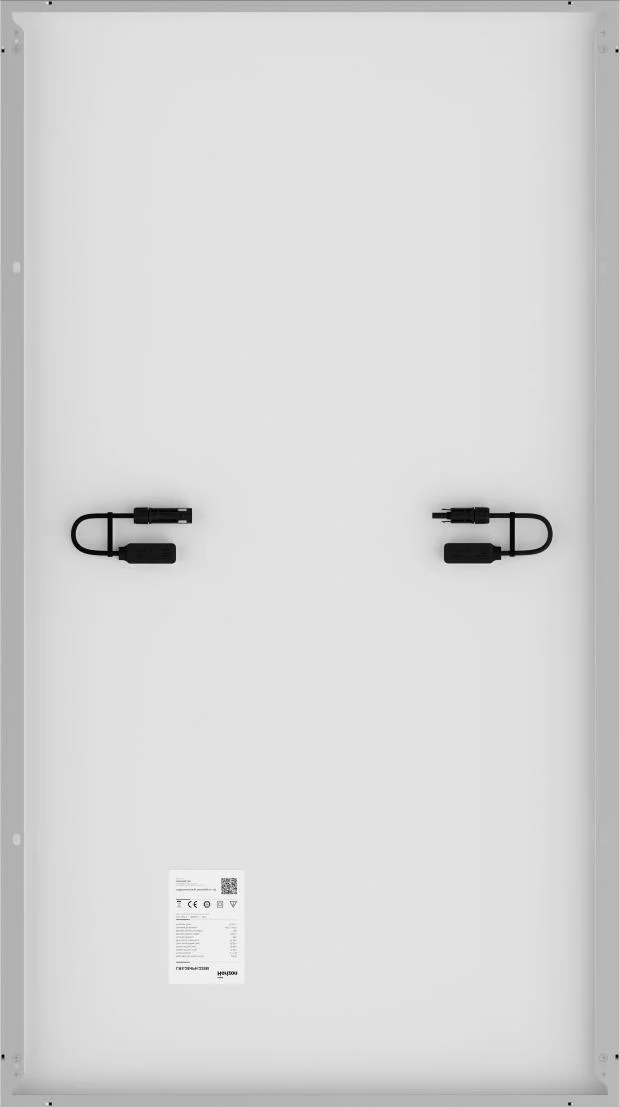
What Does 0 to +5W Power Tolerance Mean?
The power output tolerance describes the allowed variation around the module's rated power under the specified testing conditions.
For this module, the rated maximum generating power is 225W and the stated tolerance is 0 to +5W. In simple terms, the tolerance does not include a negative power range. The specified tolerance is on the positive side, up to 5W.
This is different from a tolerance such as -5W to +5W. With a symmetrical range, the tested power could be below or above the nominal rating within that stated range. A 0 to +5W specification instead indicates that the tolerance range is not designed around negative deviation from the 225W rating.
It is important, however, not to interpret the +5W figure as a promise that the module will continuously produce 230W during normal operation. The tolerance is a module specification associated with the applicable testing and rating conditions.
Actual power generation depends on much more than the nameplate rating.
Rated Power and Real-World Output Are Different
A photovoltaic module's rated power is determined under defined laboratory test conditions rather than under every possible outdoor condition.
Solar irradiance, cell temperature, module temperature, shading, dirt, cable losses, orientation, installation angle, and other system factors can affect the power delivered by a module during operation.
The datasheet for the LR5-28HTH-225m identifies a nominal operating cell temperature of 45±2°C and an operational temperature range of -40°C to +85°C. These specifications describe the module's operating conditions, but they should not be interpreted as meaning that the module will produce its rated power at every temperature within that range.
For example, a module exposed to strong sunlight can become significantly warmer than the surrounding air. As cell temperature changes, electrical output characteristics also change. This is why the rated 225W figure should be used as a standardized reference point when comparing modules rather than as a constant real-world output figure.
Why Positive Power Tolerance Matters During Module Selection
Power tolerance becomes more useful when multiple modules are being compared for a project.
Suppose a buyer is reviewing modules with the same nominal rating but different tolerance specifications. A module with a 0 to +5W tolerance has a different rated-output specification from one with a negative-to-positive tolerance range.
For procurement teams, this information can be useful when reviewing technical datasheets and comparing product specifications from different suppliers. It also provides a more precise description of the manufacturer's stated module output characteristics than simply looking at the headline wattage.
For installers, consistency between module specifications can also make system planning easier. When modules are selected for the same array, the electrical characteristics listed on the datasheet should be reviewed together rather than focusing on wattage alone.
Voltage, current, temperature characteristics, maximum series fuse rating, and other electrical parameters all need to be considered when designing a complete PV system.
What STC Has to Do With the 225W Rating
Standard Test Conditions, commonly abbreviated as STC, are used as a reference for evaluating photovoltaic module performance.
The product information for this module includes generation calculations based on theoretical values for two LONGi Horizon modules under STC conditions. This provides useful context for understanding why the 225W rating should be treated as a standardized test reference.
STC is not the same as a typical outdoor operating environment. Real installations experience changing sunlight levels, temperature, weather conditions, shading, and other variables throughout the day.
This distinction is particularly important when someone attempts to calculate daily or annual energy production simply by multiplying 225W by a number of operating hours. Solar modules do not normally operate at their rated maximum power continuously.
A more realistic energy estimate should account for local solar conditions, system orientation, shading, temperature, system losses, and the expected solar resource.
How Power Tolerance Fits Into System Planning
Power tolerance is only one parameter used when planning a photovoltaic array.
For the LR5-28HTH-225M, the datasheet also specifies a maximum series fuse rating of 22A and a Class II protection class. The junction box is rated IP68 and uses two diodes, while the output cable is specified as 4mm² with a standard length of 1200mm and customization available for cable length.
These details serve different purposes.
The 225W rating and 0 to +5W tolerance describe module power characteristics. The fuse rating relates to electrical protection requirements. The IP68 junction box specification addresses enclosure protection. Cable size and length affect installation and electrical connection considerations.
A proper module review therefore needs to consider the complete datasheet rather than treating power tolerance as an isolated purchasing criterion.
Why Module Temperature Should Not Be Ignored
Temperature is one of the practical reasons why rated power and actual output should be considered separately.
The module has an operating temperature range of -40°C to +85°C. It also lists a nominal operating cell temperature of 45±2°C.
These figures are useful when evaluating whether a module is suitable for a particular installation environment. They do not mean that the module's output remains fixed across the entire temperature range.
Solar modules operate outdoors, where the cells can heat up under direct sunlight. The temperature of the cells can therefore be considerably different from the ambient air temperature.
For system designers, temperature-related electrical characteristics are important when calculating expected output and checking the operating range of connected equipment. A datasheet should be read as a group of related specifications rather than as a list of independent numbers.
Cleaning Can Also Affect Actual Generation
The module's using tips recommend cleaning the surface frequently and placing the module under direct light for better power generation.
This is a practical reminder that the rated power specification assumes controlled testing conditions. Outdoor modules are exposed to dust, dirt, pollen, bird droppings, and other contaminants that can reduce the amount of sunlight reaching the cells.
Even when the module itself retains its rated electrical characteristics, a dirty surface can reduce the amount of solar radiation reaching the photovoltaic cells.
Cleaning practices should therefore be adapted to the installation environment. The frequency required at a dusty industrial site may differ from that at a location with regular rainfall and low airborne dust.
Water should also be handled carefully during maintenance, following the applicable electrical and site safety procedures.
Looking Beyond the Wattage Number
For buyers reviewing a module datasheet, the 225W figure is a useful starting point, but it should not be the only specification considered.
The LR5-28HTH-225m datasheet version 2 provides information covering power tolerance, operating temperature, glass construction, dimensions, weight, junction box protection, fuse rating, fire rating, and certification.
The module uses single 3.2mm coated tempered glass and has dimensions of 1354 × 767 × 30mm with a listed weight of 12.1kg. It also carries IEC 61215, IEC 61730, and UL 61730 certifications, alongside management-system and occupational-safety certifications listed in the product information.
These details give engineering and procurement teams a broader basis for evaluating the module.
How Juncess Supports Solar and Energy Projects
Jiangsu Juncess Energy Co., Ltd. has 11 years of experience in the new energy sector and has developed capabilities covering PV module trading, overseas channels, R&D, manufacturing, and integrated energy solutions.
The company has established long-term business relationships across Asia, Europe, Africa, the Middle East, and Australia, with more than 400 strategic partners. Its overseas development includes localized operations in Pakistan and Central Asia, while the company is also expanding its presence in emerging markets.
Juncess has also expanded into energy storage, with current energy storage production capacity of 1.5 GWh. Its business covers photovoltaic and energy storage integration, with an emphasis on combining new energy technologies with digital and AI-based energy solutions.
For buyers reviewing photovoltaic modules, technical specifications such as power tolerance provide one part of the product evaluation process. Supplier experience, product documentation, certification, technical support, and the ability to provide suitable energy solutions are also relevant when planning a complete project.
A Better Way to Read the 225W Specification
The 0 to +5W power output tolerance on a 225W module is best understood as a defined specification associated with the module's rated output and applicable testing conditions. It should not be treated as a guarantee of continuous 230W generation in an outdoor installation.
For procurement teams, the practical approach is to read power tolerance together with STC conditions, temperature characteristics, electrical parameters, physical dimensions, protection ratings, and certification information.
This approach provides a more accurate picture of what the module specification actually means and helps prevent unrealistic expectations about field performance.
With its 225W maximum generating power, 0 to +5W power output tolerance, 12.1kg weight, IP68 junction box, 3.2mm tempered glass, and operating temperature range of -40°C to +85°C, the LR5-28HTH-225m datasheet version 2 provides a detailed technical reference for evaluating the module before it is incorporated into a photovoltaic project.




International Headquarters :
No. 801 Huagang Road, Wujiang Economic and Technological Development Zone, Suzhou City, Jiangsu Province, China
Global Customer Service Center:
Room 1101, Building 7, Phase 2, Nan'an Xindi, Suzhou Industrial Park, Jiangsu Province, China
No.20306 & 20307, 1st Street, 2nd Floor, East No.3 Gate, Zone 2, Yiwu International Trade City, Zhejiang Province, China
3rd Floor, Plaza No. 157, Main Boulevard, Sector C, DHA Phase 6, Lahore, Pakistan
No. 65A Rustaveli Street, Yakasaray District, Tashkent, Uzbekistan
